Most people who come to us have a finished manuscript, a reason the book needs to exist. They know the path to publication is challenging. The traditional approach takes too long. They want to keep all their rights and have more say in the process. Some have been ignored or turned down by agents or a publisher. Some haven’t tried because they know the odds are against them. This page is what we do about that and what it involves.
A brief explanation of what we do
Traditional publishers overlook or dismiss many books that merit publication. That’s not a failure of taste. It is the economics of their business model.
We do not limit ourselves to books by famous authors, proven bestsellers, celebrities, or hot-buzz debuts with an established audience. Some of our titles sell well commercially. Others meet an author’s or client’s personal, professional, or institutional objective and sell at lower retail volume. Others sell in quantity directly to readers and organizations — volume that would rank them as bestsellers if it moved through retail channels. A book doesn’t have to look like a guaranteed bestseller before we consider it.
Adducent has published 114 titles under its imprints since 2000 — FORTIS (nonfiction and memoir), BOOKNOLOGY (business and educational nonfiction), ESCRIRE (fiction), and STANDFAST, established in 2026 for titles from the special-operations and intelligence communities. Two have been selected for United States military professional reading lists: Fortune Favors Boldness, by Vice Admiral Barry M. Costello, on the Chief of Naval Operations Professional Reading List, and What Now, Lieutenant?, General Richard “Butch” Neal’s memoir, on the Commandant of the Marine Corps Professional Reading List.
Read: Who We Publish (Senior Client Roster)
“After being turned down by Naval Institute Press, I followed a recommendation from my trusted friends VADM(Ret) Bill Sullivan and VADM(Ret) Tom Church (who have both published books about their experiences on active duty) and contacted Dennis Lowery at Adducent. He is a former Sailor who owns his publishing company. Simply put – he was prompt, professional, and perfect to help bring “Fortune Favors Boldness” to life … one of only 12 books currently on the CNO Professional Reading List. His belief in the story and confidence in the product ensured generations of Sailors, Marines, and Coastguardsmen will know the tale of heroic activities at the beginning of OIF. I recommend him to all of you future authors to tell your stories such that they can be preserved for those who follow!” —Vice Admiral Barry M. Costello, USN (Ret.)
“Dennis Lowery is a consummate professional who has a unique talent for being able to help you help yourself in developing your story, whether fiction or nonfiction. Blessed with great patience, he is a good listener who gently leads you as your project progresses, while at the same time making sage and valued comments for consideration. Responsive and diligent, he is a master at bringing out that elusive idea or thought, presenting it to you in a thoughtful yet persuasive manner. He introduced me to creative nonfiction and effortlessly guided me along a path that led to my first book. If you are considering writing a book, the ‘go-to man’ is Dennis; he will aid and assist you throughout the effort and will make the journey enjoyable.” —General Richard ‘Butch’ Neal, USMC (Ret.)
Why we charge for publishing
A traditional publisher pays for production because it expects the book to earn that money back plus a profit. Acquisition turns on that expectation — market size, projected volume, comparable titles, return — more than on the manuscript. A book can be well written, worth reading, and useful to — even loved by — the people it was written for, and still fail that test. A first book with a real story and no established audience fails it almost automatically. We publish the good books that fail that traditional publisher’s test.
The editing, design, production, and distribution still cost what they cost. When no publisher bets on sales, the author or client funds the work instead. That is the trade, and it runs both ways. A traditional publisher funds the book, takes the rights, and keeps most of what it earns. Here you fund the book, keep every right in every territory and format, and receive 50% of publisher net — reported quarterly, paid monthly.
Read: What Editorial and Publishing Work Costs — the figures, the editorial floor, and how the royalty split works. Read publishing costs for just that overview and breakdown.
Paying us does not buy publication. We assess every manuscript before we take it on, and we decline projects.
What you keep
- All rights to your work, in every territory and format.
- More control — over the schedule, the cover, the text, and what happens to the book after publication.
- 50% of publisher net, reported quarterly and paid monthly.
What we provide
A quicker path to publication and to market than the traditional route.
Production
- Interior design and layout — the print-quality bookblock.
- Cover design and layout — the print-quality paperback cover or dust-jacketed hardback production file.
- Custom and special editions options: cover and dust-jacket embossing, illustrated interior endsheets, and other elements.
- Publication under one of our nonfiction or fiction imprints.
Distribution and fulfillment
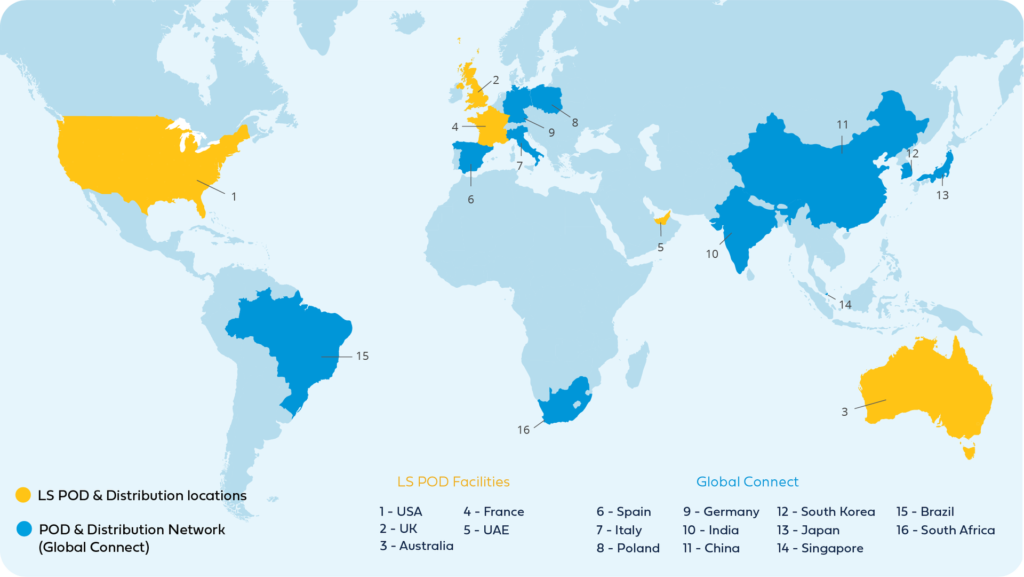
- Global print-on-demand, with no capital tied up in print runs, warehousing, or logistics.
- Retail availability to booksellers worldwide through our distributor, Ingram.
- Direct fulfillment of volume wholesale orders to organizations.
- Offset printing, warehousing, and distribution where volume justifies it. Long runs lower the cost per copy, but only for a proven, consistently in-demand title. This requires client/author investment.
If you would rather self-publish, we provide the component services: editing, bookblock creation, cover design and layout, production files for Amazon KDP, IngramSpark, or another platform, ebook creation, and title setup support.
Not every book starts as a manuscript. Some clients arrive with an idea, a body of material, a career’s worth of notes, or a set of interviews and no draft at all. We can develop and write those books for you — see Writing Services — and everything above applies once there is a manuscript.
Two ways to publish
Commercial puts the book under one of our imprints and into global distribution — catalog listing, metadata, and retail availability worldwide with booksellers. It is the route for a book meant to reach readers it doesn’t already have, and it carries the editorial standard that comes with our name on the spine.
Private produces the book to a standard suitable for your own direct order, without retail distribution or a retail imprint.
Private is not the budget version of Commercial. It is the right answer for a different purpose — a memoir written for family and colleagues rather than for the market, a unit or institutional history for a closed readership, material an author would rather not see sitting in a retail catalog. Among our clients, it is chosen for discretion at least as often as for cost. Which one fits is usually settled in the first conversation.
IMPORTANT NOTE: We accept manuscripts that have been previously edited by other professionals. However, prior editing does not waive our editorial review requirement. We independently assess every manuscript before publication and provide a written report of our findings. The author may share that assessment with their editor or previous editing team and continue working with them to address any issues identified.
What we will not do
We do not accept unsolicited manuscripts. Unless Dennis Lowery has requested it, do not send us your manuscript; we discard unsolicited submissions unread. Solicited manuscripts must include a synopsis.
We do not publish everything submitted to us. We review every prospective project against quality and content standards before we take it on, and we decline work.
Before an agreement
Before entering into a publishing services agreement, we assess the manuscript to determine what editing and production work it needs. You may retain an editor of your choice and have the manuscript edited before it reaches us, or we can do that work— from proofreading to developmental editing and rewriting. Prior editing does not waive the review; we assess every manuscript regardless of who edited it, and we provide a written report of what we find.
You receive a detailed pricing proposal covering every stage of the project, with a milestone schedule and dated deliverables, before you commit to anything.
About distribution
Our distributor is Ingram Book Group, a major distributor in the United States, distributing to almost 40,000 retailers, libraries, schools, and universities in 200 countries across North America, the United Kingdom, Europe, the Middle East, South America, Australia, and Asia. And the network continues to expand. Ingram reports its network reaches 50% of the world’s population.
“I could not have written this book without the advice and support of Dennis. I was consistently amazed by his advice, writing creativity, and ability to describe situations with clarity and simplicity. I have great respect and admiration for him. He is a Superstar!” —Dr. Irene Trowell-Harris, Major General, USAF (Retired), author of Sky High and BRIDGES
Interested in our help for your publishing project?
A consultation call costs nothing and obligates you to nothing. Tell us about the book — do not send the manuscript; we will ask for it if it is a fit. We will tell you what the work looks like, what it would cost, and whether we are the right firm for it. If we are not, we will say so.
Read our Frequently Asked Questions Page.