Home Blog Page 5

THANKS GIVEN


What readers had to say about this story:

“Hermosa. Lagrimas en mis ojos. Beautiful. I’ve tears in my eyes.” –Merchi Sananes

“Me encantó! La traducción era soportable. Felicidades, es precioso.Loved it… it’s beautiful!” –Elsa Bornay Delgado, Madrid

“Thank you for this beautiful story gift” –Galit Breman

“I loved this story, thank you for sharing.” –Tamara Copeland

“Perfect little reminder of what we are grateful for. Thank you for this. Love it.” –Dawn Jackson

“You were born to write, Dennis Lowery and that shows in every word. What a beautiful celebration of family. Lovely. Truly lovely writing.” –Sean Cowen

“Wonderful, as always.” –Sherry Thompson

“A Beautiful story. Thank you for sharing.” –Bernice Joe

“A story from Dennis Lowery, do take a couple of minutes to read his wonderful words. For me they always conjure perfect images of the story as if I were running a movie clip in my head. I highly recommend checking out more of his excellent work.” –Fay Handstock

“Beautiful.” –Deanna Elliott

“This touched my heart in many ways for I can relate in many many ways. I cried when I was reading this. For I feel the exact same way. And reading this with my three yr. old laying in my lap falling asleep… I look at her and am truly blessed in every way. Thank you for helping me see that again” –Brandie Chavez

“Dennis, this is a beautiful piece of writing. I love it. And it made me think of my own memories that HAD power over me that I did not realize until reading this. Thank you.” –Vera Athans

“Heartwarming and cozy, like a hug by the fire on the hearth. We need to be constantly reminded of what’s worthwhile.” –Liz

“I so enjoyed this!” –Lena Kindo-Kamara

“Dennis, that is beautiful! I love it.” –Joyce Swindall Jacobs

“I’ve seen this story play out in real life. It’s wonderful that you can put it on paper, the way you do. I loved it.” –Karen Gross

“A great and heartwarming story.” –Annemieke Reffeltrath

“This is lovely. I love how you describe the sounds and smells and sights. Great!” –Nina Anthonijsz

“Love it, Dennis! Your writing is awesome!” –Sylvia Sotuyo

“Perfect!” –Cilla Cantrell

“Beautiful, thank you.” –Tracie Parker

“Great and worthwhile read Dennis, and I especially liked how your story and postscript worked together to create a message that is both as beautiful as it is true and meaningful. Hopefully the core of it sinks in to every and anyone reading it.” –Michael Koontz


Listen to the song from our music studio based on the story:

The Story

I flipped over the wreath in my hands to make sure the wire loop was secure. On the back was my wife’s small tag on all our keepsakes, so she’ll know when we got them. I smoothed the curled corner of the label; its blue ink had faded. That was a good year. My job had been going well, and with cash from exercising stock options and selling the shares for the down payment, we’d bought the house.

It seemed an eternity since.

Instead of hanging the wreath, I thought about our home back then. Plenty of room to raise a family, a fireplace, a beautiful yard, and an office for me. We had looked forward to it for so long. Dreaming of the day when we wouldn’t be jammed in a small apartment like the one we’d lived in since our marriage six years before. It had grown tinier with Anna’s birth just after our third anniversary.

We’d pushed hard to get everything done that year so we could move in before Thanksgiving and celebrate in the first proper home of our own. Diane insisted we stop after the closing to buy the perfect wreath she’d found at Costco to go over the fireplace mantle for the holidays. It was the first thing she had brought in and put up. Seeing her so happy and excited made me smile for days.

During the winters in our home, we always made a fire on frosty nights. I insisted on natural wood, not those fake logs, and bought a cord at a time. Sometimes getting bigger pieces to split in the backyard and bring in to stock the wood box next to the hearth. I can still feel the heft of the ax and the blade’s bite into the wood. A solid sensation from hand to wrist and up through my arms ending in a sharp, crisp sound in the frigid air. In some primal way, it meant something… that tactile sense anchored the setting—and me—at that moment: a man cutting firewood to keep his family warm at night. The making of the fire: kindling and some wadded newspaper to get the smaller pieces going. The first smell of wood smoke as it caught… the crackling and snapping sound as the flames ate into the wood. The moment of holding my hands to the fire to warm them as I watched it dance. It felt good.

On Thanksgiving Eve, we’d begin decorating, and the next day we’d play the first holiday music of the season. I remembered one song that touched me profoundly and whisper-sang a line from it: “The fire held the room in its warm embrace.” ‘Music Box Blues’ from Trans-Siberian Orchestra’s ‘Ghosts of Christmas Eve.’ Yeah. It was just like that. We would sit drinking hot cocoa on those chilly evenings. Just us three: Anna in her Batgirl pajamas, in front of the fire, cupping a mug in her hands. Me and Diane on the couch, my arm around her. We’d watch as a handful of flames palmed the wood. The flickering orange fingers, curled and extended, tickled and teased beneath the three stockings hanging from the mantle. The wreath, Norman Rockwell picture-perfect, just as Diane knew it would be. It was like us; a closed loop, whole and absolute in its continuity, purpose, and meaning. Good times. Warm times.

Until we lost our home and what our life had been.

I shook off the thoughts and memories. It was hard. My mind poked and prodded them as if that would change things. It—today, Thanksgiving Eve—was the beginning of our first holiday season in this apartment. We’d gone backward. I shook my head. Diane wanted to put the wreath on the wall over the TV. It was the only spot for it, but I didn’t want it glaring at me. I think it missed its place over the mantle and blamed me. Join the club.

I set the wreath on the table next to the couch and looked through the window at daylight’s end and the night’s beginning. An early winter storm had set in. The snow and sleet slapped the windows of the building as if to wake the people inside. It was blowing from all directions, like the stinging, agitating thoughts that swirled in my head. I leaned into it, pressed my forehead against the cold glass, and thought of what went wrong and what I… what we… had lost.

The neighborhood had put up Christmas decorations and lights earlier in the day. The streetlamps outside, wrapped in silver, blue, and gold, shimmered just beyond the rattling frosted pane. Inside on the windowsill, reflected on the glass, sat a set of three plastic candles with flickering red, flame-shaped bulbs on a molded holly-berry base whose green had mostly rubbed away, leaving yellowing-plastic leaves. A cherished decoration from Diane’s childhood. Outside or in, the colors were pale shades of holidays past. I shook my head, but that didn’t help me see them more clearly.

I heard laughter, pure… the ring of the sweetest of bells, and turned. Anna sat at the table in the tiny combination kitchen and eating area. Smiling and laughing, she made gingerbread houses with Diane, whose apron stretched tight over the unplanned child that would come with the New Year. Anna looked at me with the gap-toothed Cheshire cat grin she bestowed on everyone since losing two top front teeth. She was beautiful, like her mom, who saw me watching and beckoned.

When I didn’t move, she came over to where I stared, not seeing, out the window.

“Daniel.”

I turned toward her—thoughts still lost in the deepening dusk—but couldn’t meet her gaze.

“Close your eyes.”

I did, and soft, warm lips touched mine. Then Diane’s growing belly pressed against me, and a one-armed hug pulled me close. I opened my eyes. She held a sprig of mistletoe over my head and then lowered it to put both arms around me. I squeezed her tight, feeling the fullness of her stomach and breasts… of motherhood and strength. Then another hug from two smaller arms wrapped around my waist this time. Looking down, I saw Anna, face tilted up, her grin dialed to 10x power as she hugged us both.

“I love you, Daddy.”

“I love you, sweetie.”

I whispered in Diane’s ear, “And I love you more than I can ever show you.”

Her lips were on mine again, and then she rested her head on my chest. With their arms around me, time stood still while four heartbeats synchronized. Somewhere between them, a bone-deep certainty stirred to life what I thought was dead, long gone… lost with all those things an eternity ago. Its warmth backed off the chill, and I knew what’s important in life was my family. They’re with me and still love me. What we lost were possessions. If we want, we’ll get them back one day. I thought of how much influence the past had on me… the weight of mistakes made and the bad things that resulted. And I realized they only had power over me if I gave it to them. It was time to stop.

The jasmine fragrance of Diane’s hair soothed me. We’d gone through tough times and were still together, still loved each other. That’s what mattered… what counted. One day we’ll have a new house, fireplace, and mantle for the wreath to smile down at us from and a kitchen big enough to fit all of us. It’ll have a great yard, enough to run and play in for Anna and the puppy I had promised her… and for my son.

A timer went off in the kitchen. The buzz called for Diane and Anna’s attention. With a squeeze, they let go, but they still held me, though now a dozen feet away. The clatter of metal sheets from the oven came with the fragrance of fresh-baked cookies. I took a deep breath and sighed at the scent.

The silence outside drew me back to the window. The wind had fallen, snow now drifted, each fleck a small shaving from winter’s beard, a slow pirouette in the night sky. The flakes flickered in and out of sight as bands of illumination from car headlights painted them against a dark backdrop. I felt I had been out there for so long. Where the lights didn’t show you the way, and no coat or layer of clothing could keep you warm. Where you’d walk for what seemed forever, head down into a bitter wind, but get nowhere. Alone and lost inside your head.

That, too, had to end. There was no absolution found in wandering. I turned from the dark and cold and picked up the wreath I’d set aside. I hung it on the wall over the TV and stepped back to see how it looked. A few minutes ago, I had grasped what it stood for all along. A symbol of family and love. How could I have lost sight of that? It was always there. Home is with my wife and children. Not some fixed location or piece of real estate. It’s being together and loving each other, no matter the circumstances. That’s what makes wherever you are home. How selfish I’d been to hold my anger inside and let it chip away at all the things I should be so thankful for, all the reasons to be happy. I breathed deep from my core like I hadn’t in two years. It was time to give thanks, to live in the present, and appreciate all the good things I had that others might not have.

Gratitude washed over me, and I felt the past lose its choke-hold. We didn’t need to wait for things we could have now if we chose to. We could find another place that would allow pets… maybe with a park nearby. A puppy would be perfect. I smiled, thinking of the upcoming holidays and the New Year as I turned to my family. “Can I squeeze in and help?” Diane looked up from icing a gingerbread roof and beamed at me. Anna slid her chair over with a scraping sound and shined that grin. There was space. I sat between them, not wanting to waste another moment of my life in the past. I had too much to be grateful for right here, right now.

# # #

Note From Dennis

I know good people who don’t have what Daniel has in the story. Maybe as they read it or afterward, they thought, “Nice story, but I’m alone. I have no one to be with or family to count on.” That is a reality for some, and what I’ve written, instead of bringing a measure of joy or warmth, might make them sad. And knowing that dismays me. I don’t want what I write (have written) to leave them feeling that way. I wish all good people to have what Daniel has… that foundation of love. And if there is anything in their life that is lacking, I hope they apply what I wrote in Daniel’s realization: You can’t change the past—learn from it—don’t let it control you. Deal with the present, decide, and act to shape your future. Life’s all about what you do now. Easier said than done, I know. But if you’re one of the good people, you owe yourself the effort. I hope you can be thankful for the good things in your life and that you create the reality of a positive tomorrow(s) through what you do each day.
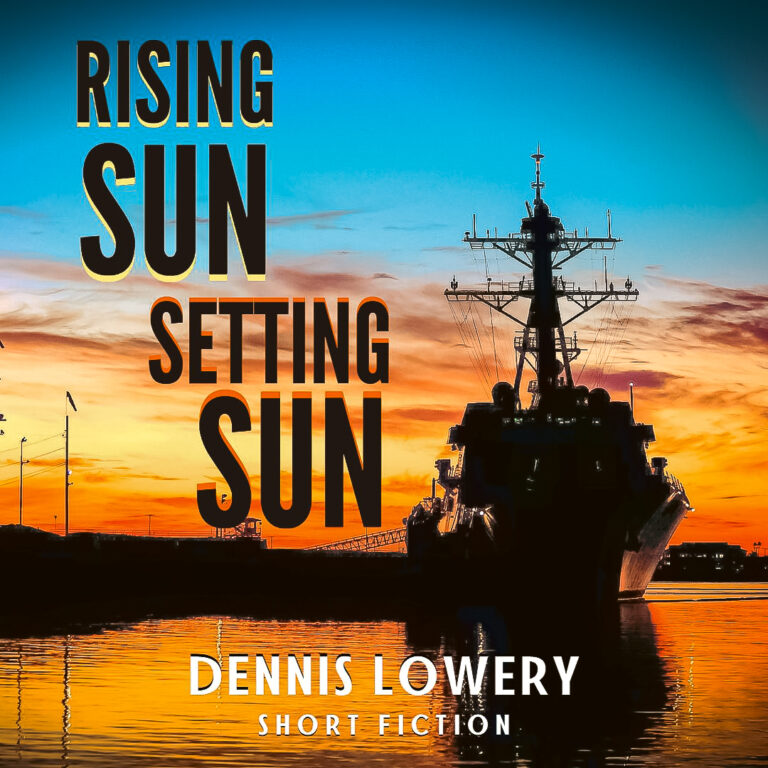
RISING SUN | SETTING SUN

“Excellent short story. Your writing style reminds me of my favorite short story author–O’Henry!” – James G. Zumwalt

“It has an F. Scott Fitzgerald feel to it…. Irony. How wonderful. I love this story.” – Vicky Kline


“Be resolved that honor is heavier than the mountains
and death lighter than the feather.”
―Yasuo Kuwahara

July 7th, 2012

The Cessna’s engine rattled. A wet cough, old lungs failing. Eighty-three years old. Isamu’s hands on the yoke—knotted fingers, arthritic knuckles—felt the vibration through the control column. The doctors had used that American phrase. On borrowed time.

He’d paid for every day.

Scars on his face caught the late sun through the windscreen. Deeper scars inside where no light reached.

The runway at the small airfield near Yokosuka stretched ahead. Hot asphalt shimmering. He advanced the throttle three notches. Held the brakes. The aircraft shuddered, but it was sound. Functional.

His retirement letter lay on the right seat. Creased paper. Formal characters. With greatest respect, we congratulate you on your retirement after a long and honorable career in government service.

Coward’s hands held the yoke. He’d served his country for decades. But once—when it needed him most—he’d turned from duty. The Americans had pulled him from the water. Saved him when he should have died. His mother’s voice never let him forget.

Perhaps today, he could put her to rest.

He released the brakes.

The acceleration pressed him back. Not hard. Gentle. Like a hand on his chest. Ground speed forty. Fifty. Sixty. He pulled back on the yoke. Front wheel lifted. The aircraft climbed into golden air.

No wind today.

Not like July 4th, 1945.

He banked east. The setting sun bled red behind him. Bloody clouds. He climbed to five hundred feet and turned north along the coast. The harbor at Yokosuka would be quiet on a Saturday evening. Gray ships at their piers.

The memory came as it always did.


July 4th, 1945. Dawn.

The sun broke through clouds and spilled light across the field. Six aircraft in line. Engines idling. The first—the only one whole—was the kaigun-dai’s Zero. Behind it, patchwork monsters. Metal patches. Wooden repairs. Binding wire holding wings together.

Frankenstein creatures in the morning light.

The thought came with his mother’s voice. She’d taken him to see that American movie for his birthday in San Francisco. Isamu, why do you like these awful movies? They are not suitable for you. But she’d taken him anyway. Sat beside him in the dark theater watching the monster stumble and rage. Created by a man. Destroyed by men. Neither creator nor creation ever asked what they’d become.

Now here were Japan’s Frankenstein monsters. And he would pilot one.

Isamu stood at rigid attention. Sixteen years old. Slender, tall for his age. Fine features. Long fingers holding his soft cover against the wind. Artist’s hands, his mother called them. Had called them. Before the firebombing of Tokyo on March 9th killed her and a hundred thousand others. Her birthday and his. An irony that today—July 4th—was also a celebration. For Americans.

For him, it had become a day without meaning. Yet one that now meant everything.

The kaigun-dai stood near the small wooden building. His right sleeve empty, pinned to his shoulder. It flapped in the wind. Despite the missing arm, he was powerfully built. Solid chest. Thick neck supporting a burn-scarred head that lacked an eye. His face was stiff with pride. When he moved, you could see what he’d been. A carrier pilot once. Ferocious. Now shattered legs dragged across dirt. One after the other.

He glared into the sun. One eye refusing to yield. Refusing to shade it with his remaining hand. After a long moment, he turned to face the line of child-pilots.

“Today, you serve the emperor as do I. Today, we become immortal!”

The words were bitter lies in the air. Isamu heard them for what they were.

With a fierce scowl, the kaigun-dai lurched to the last airplane in line.

The smallest boy—the youngest—stepped forward. Marched to meet the officer at the aircraft. Saluted. Climbed into the cockpit.

A mechanic—a sergeant with gray in his hair and deep lines around his mouth—climbed onto the wing. He pulled the canopy closed and began seating bolts on the left side. One bolt. Two. Three. Four. Each one driven through the canopy frame into the cockpit rail. Locking the boy inside.

The sergeant moved to the right side. Same procedure. Bolt. Bolt. Bolt. Bolt. The boy’s head visible through the glass. Not moving. Staring straight ahead.

Three more aircraft. Three more boys. The methodical horror of bolts being driven. Each canopy sealed. Each pilot locked inside their Frankenstein machine.

Then the last boy and the second aircraft in line.

Isamu stepped forward. Marched to his aircraft. Saluted the kaigun-dai. The shine on the officer’s face caught his eye. Sweat or tears. A blind eye still weeps. A hard heart still sweats. It didn’t matter which.

Isamu climbed into the cockpit. The sergeant began with the left side. Close to the kaigun-dai. One bolt. Two. Three. Four. Driven home. Secure.

The sergeant moved to the right side. Away from the officer’s view. He positioned the first bolt. Tried to drive it. The wood frame around the canopy rail was splintered. Dry. The bolt wouldn’t seat. He tried the second. Same problem. This side had been poorly repaired. Wood already splitting. The bolts wouldn’t hold.

The sergeant’s hands paused. His eyes met Isamu’s for one second. Then he straightened. Stepped down from the wing. Said nothing to the kaigun-dai. Walked back to stand by the building.

The right side of Isamu’s canopy was unsealed.

The kaigun-dai saluted the line. Shambled to his Zero. The only worthy aircraft. Tired. Worn. But deadly still. He waved off help from the sergeant. One-armed, he pulled himself up the ladder. Swung broken legs into the cockpit. His canopy stayed open. Unsealed. No doubts. No questions about duty.

Isamu glanced at the others, even younger than him. Three weeks of instruction. No navigation training. Barely basic instruments. Power settings. Control movements. Hatchlings pushed from the nest too soon. This was their first solo flight.

It would be their only flight.

At the field’s edge, the sergeant waved a red flag. Isamu advanced his power three notches. Brakes on. The aircraft shook with increased RPMs. Not power barely contained. The convulsing of something wounded, forced to run when it wanted to die.

The green flag raised.

Isamu released brakes. Power to half. Watching the Zero’s tail ahead. It moved. He advanced throttle to three-quarters. Speed building. Forty. Fifty. Sixty. Ease back on the stick. One more notch of power.

Wheels left the ground.

Then the wind hit them.

God’s breath. Scattering geese after the first shot. Five aircraft. Five directions. The wind was a hand shoving him sideways. He fought the stick. Tried to follow the lead Zero. Behind him, others failed. Angled off. Taken by the wind.

It wasn’t far to fly. American ships drew closer every day. Pounding guns that never stopped. Their submarines severing arteries. Their aircraft—first insects, then crows, now buzzards circling the dead and dying.

Isamu glanced at the control stick. His hands gripped it. Artist’s hands gripping a shaking, shivering thing. The twitching of something dying.

Then the ships appeared. So many ships. The sky became a garden. Black flowers blooming on smoke stalks. Each burst meant to kill him. Fireworks of the deadliest kind.

Ahead, the kaigun-dai’s Zero pitched down. Dropped toward a gray ship below. Explosions filled the air. Fire and smoke. The Zero spun right—one wing gone, tail blown off. A discarded carcass. The officer and his aircraft falling. Food for fish.

The ship filled Isamu’s windscreen. Its bridge. Forward gun. Fresh paint. New rust. Exquisite clarity. The gun centered on him.

Black maw of his death.

It flashed.

He flinched. Yanked the stick right. The ship slid left. Only water ahead. Gray-green. Churning.

Impact.

Rattle-shock. A can of rocks dropped from a building onto pavement. The unsealed right side of the canopy gave way. Tore off. Water flooding in. The taste of bright copper blood. Bits of teeth in his ruined mouth. His hands still gripped the stick.

His mother’s voice whispered through the roar of water: Beautiful hands. Artist’s hands.

All he saw were a coward’s hands as the waves took him under.

The Americans pulled him out minutes later. A boat alongside. Hooks and gaffs. Rough hands dragging him from the water like debris. Like a caught fish. He was the enemy. One of the people who bombed Pearl Harbor. They hauled him aboard. Restrained his hands. Spoke words he didn’t understand. Their voices hard.

He should have died. The bolts should have held. He should have been locked inside like the others.

Instead, he lived. Pulled from the sea by those he’d tried to kill.

The shame was heavier than mountains.


The harbor at Yokosuka spread below. Gray ships at the piers. Isamu dropped to three hundred feet. Began his approach from the sea.

A destroyer at the main pier. He could see people on deck. Children. A summer school group visiting. American kids. Japanese kids. Mixed together. Saturday afternoon. Independence Day had been Wednesday, three days ago.

He circled. Studying the ship. USS Montgomery painted on the stern transom. He slowed. Dropped lower. Two hundred feet.

Activity on deck now. They’d spotted him. An unauthorized aircraft in restricted airspace over the naval base. Threat protocols engaged. Sailors moving. Now he could even hear the ship’s klaxon sounding the security alert.

Isamu had expected this. The ship was fixed. A sitting duck at the pier. It couldn’t maneuver. Couldn’t run.

But he could change course.

His hands—old, gnarled, twisted—tightened on the yoke.

The deck cleared fast. People running. Kids pushed toward the gangway to the pier. A young sailor—part of the deck watch—sprinted to the port rail. Raised a handgun. Sighted on the approaching aircraft.

Isamu pushed the yoke forward. Nose down. Speed building. The destroyer filled his view.

The young sailor fired.

The windscreen starred. Glass blowing in. Something hot tore across his forehead. Blood in his eyes.

Isamu pitched right. Not hard. Not as much as he could. Just enough. Away from the ship. Away from the children.

The water rushed up.

Like before.

The Cessna hit beside the Montgomery. The nose crumpled. Green water surged through the shattered windscreen. Over his head. Into his mouth. Filling his lungs.

Cold. The shock of it.

His hands floated to his face. Blood washing away. Old scars and new cuts.

Quiet under the surface. Pressure in his ears. In his chest.

The cabin door was open; the means to escape fate. As free to face it as the kaigun-dai had been that morning so long ago.

No bolts this time. No failed mechanism. No accident.

His choice.

His mother’s voice faded, finally releasing him.

The aircraft settled into darkness. Taking him with it.

The sea held him. Would not let go.

# # #

“But seek only to preserve life, your own and those of others.
Life alone is sacred.”
 ―Yasuo Kuwahara

THE HUNGER

The opening scene (set in 1975) from Dennis Lowery‘s 2024 Halloween story turned into a classic rock song. Read the story.

How Smart Content Studios Are Winning

0

Key Takeaways

  • Smart Content Studios thrive by focusing on strategy, authenticity, and audience connection amid industry changes.
  • The new entertainment landscape rewards creators who offer genuine value and unique experiences, not just high budgets or recognizable brands.
  • AI tools help writers enhance their storytelling while maintaining creative control, making expertise vital.
  • Small players are outperforming big studios by establishing niche markets, diverse income streams, and genuine audience relationships.
  • The future favors creators who prioritize quality content, authentic storytelling, and sustainable business models over sheer volume.

How Smart Content Studios Are Winning While Others Fade Away

As we reach mid-2025, something remarkable is happening in entertainment. While some content studios collapse under their own weight, restructure, or downsize… others quietly build sustainable businesses that outperform billion-dollar competitors.

While some content studios collapse under their own weight, restructure, or downsize… others quietly build sustainable businesses that outperform billion-dollar competitors.

The difference isn’t luck, star power, or massive budgets; it’s strategy.

This transformation has roots in the recent past. Remember when every company was launching a streaming service? Disney+, Apple TV+, Peacock, Paramount+, and others. Platforms multiplied like rabbits, each burning millions, sometimes billions, to create exclusive content. That era is over.

The streaming platform wars ended not with a bang but with a spreadsheet.

The New Math of Entertainment

Americans cut their streaming spending by 23% last year, dropping from $55 to $42 monthly. They’re tired of juggling subscriptions and increasingly choose free, ad-supported options.

This selectivity benefits smart content creators. When audiences become more discerning, they abandon weak content faster, leaving more attention and market share for creators who deliver genuine value.

Meanwhile, Disney reduced its content spending from $27 billion in 2023 to $23.4 billion in 2024 and plans to spend $24 billion in fiscal 2025. Netflix dropped to $13 billion in 2023 due to industry strikes before returning to $17 billion in 2024.

This isn’t industry death—it’s an industry growing up. The subscription gold rush created an artificial content bubble. When it popped, only the smart players remained—will remain—standing.

Who’s Actually Winning

Take Nintendo’s approach with the 2023 Super Mario movie. Instead of treating it as a simple licensing deal, they integrated the film into their broader gaming ecosystem, generating over $1.3 billion at the global box office while driving game sales.

Sony did something similar with The Last of Us, turning a beloved game into HBO’s biggest hit while driving new game sales.

Another example: Fallout is an American post-apocalyptic drama television series created by Graham Wagner and Geneva Robertson-Dworet for Amazon Prime Video. Based on the role-playing video game franchise created by Tim Cain and Leonard Boyarsky. Amazon purchased the rights to produce a live-action project in 2020, and the series was announced that July. Fallout premiered on Prime Video on April 10, 2024. The second season is set to premiere in December 2025. The series was renewed for a third season in May 2025, ahead of the second-season premiere.

These companies, smart content studios, understand something crucial: today’s audiences don’t just want content; they want experiences that connect across different formats.

Brand studios are having their moment, too.

Starbucks announced the launch of Starbucks Studios in June 2024, partnering with Sugar23 to ‘produce original entertainment and tell stories that deepen connections and spark conversations.’

LVMH launched 22 Montaigne Entertainment in February 2024, partnering with Superconnector Studios to develop film, TV, and audio productions for its 75+ luxury brands, including Louis Vuitton, Dior, Tiffany & Co., and others. They expect the ‘groundwork to pay off in 2025.’

Chick-fil-A announced original programming plans in August 2024, initially reported to include reality TV and game shows with budgets of around $400,000 per episode.

While their content is still developing, the strategy makes sense. These companies have built-in funding, established audiences, and clear business purposes beyond creating content.

Compare this to traditional studios, burning money on shows nobody watches, hoping to stumble onto the next hit.

The Rise of the Small Players

Here’s where things get interesting. While big studios struggle with massive overhead and bureaucratic decision-making, smart content studios and small creators thrive. Research shows that 39% of consumers watch more creator-produced content than a year ago, compared to just 22% watching more studio content.

Why? Authenticity beats production values. A crime writer with real detective experience creates more compelling stories than a team of writers googling ‘how police investigations work.’ A romance author who understands actual relationships writes better love stories than a committee following market research.

Micro-influencers with under 1,000 followers get 9.7% engagement rates. Mega-influencers with over 100,000 followers? Just 1.7%. Smaller, focused audiences care more than massive, distracted ones.

But how are these small players building sustainable businesses while major studios struggle?

The answer involves a surprising shift in how AI and authentic expertise reshape content creation…

The AI Opportunity Studios Are Embracing

Hollywood studios see AI as a productivity tool, much like editing software replaced manual film cutting or digital cameras replaced film stock. While the industry initially resisted these changes, studios eventually embraced technologies that improved efficiency and reduced operational costs.

The 2024 writers’ strike included provisions about AI use, but studios and competent writers are finding ways to work together. AI tools can handle routine tasks, such as research, fact-checking, formatting, assisting with worldbuilding, creating story bibles, and initial editing passes, freeing writers to focus on creative work that requires human insight.

Smart content studios and creators understand this opportunity. AI can free up human writers to focus on what AI can’t do: crafting compelling characters, understanding complex emotions, and creating stories that resonate with genuine human experiences.

Consider how a thriller writer with intelligence operations experience might use these tools. AI can help them manage their story universe and lore, research agency procedures, or compile trauma-related psychological studies. Still, only someone who has analyzed human behavior under pressure can create believable characters making impossible choices.

The technology amplifies real expertise—it doesn’t replace it.

Writers who embrace these tools gain competitive advantages. They can research faster, manage story worlds and story bibles, write cleaner first drafts, and spend more time on the creative work that makes stories memorable. Those who resist may find themselves outpaced by colleagues who work more efficiently.

This is why a small, smart content studio, with real expertise and innovative tools can outproduce a twenty-person writing room committee that ‘meetings’ itself to death.

What’s Not Working Anymore

The old playbook is broken.

Studios still betting on brand recognition alone are in trouble. By late 2024, audiences showed ‘franchise fatigue’—too many Marvel movies, endless sequels, and reboots of reboots. 2024’s Inside Out 2 made $1.69 billion. Early 2025’s Thunderbolts, with its budget at $180 million, has grossed $326 million in its ongoing theatrical run. Breaking the malaise and stagnation because they had good stories to tell.

High-volume content factories face a complex equation. While using existing AI tools is relatively affordable, audiences demand quality and authenticity that assembly-line production struggles to deliver. You end up with the worst of both worlds: higher expectations from viewers and more competition from creators who use technology more strategically.

Studios dependent on platform deals are vulnerable. Netflix, Disney+, and others are getting pickier about what they buy. Building direct audience relationships provides more stability than hoping a platform executive likes your pitch. Establishing demand with a direct audience can translate to platform interest and even greater success.

The Smart Play Going Forward

Here’s how smart content studios and creators are building sustainable businesses:

Going Deep, Not Wide: Instead of chasing every trend, successful creators focus on specific niches where they have genuine expertise. Macy Alden doesn’t try to write in every genre—she focuses on romance and fantasy. Her upcoming stories are rooted in folklore and cultural traditions to build a devoted readership that trusts her authentic approach.

Technology as Assistant, Not Replacement: The best creators treat AI like a capable intern. It can transcribe interviews, suggest research directions, and clean up first drafts. But it can’t replace the crime writer’s years of police work or the psychologist’s understanding of human behavior under stress.

Multiple Income Streams: Smart creators don’t depend on a single revenue source. They combine book sales with direct subscriptions, speaking engagements, consulting work, and merchandise. When one stream slows down, others keep flowing.

Authentic Voice Over Perfect Production: Readers and viewers can instantly spot manufactured authenticity. The creators winning big are those brave enough to draw from real knowledge and personal experience, even when it’s not perfectly polished.

The International Picture: This isn’t just an American phenomenon. Netflix’s 2024 ‘One Hundred Years of Solitude’ as a 16-episode series showed how global stories can work when treated with respect rather than as generic content. Korean entertainment proved this in the past with Squid Game and dozens of other hits. Local authenticity with global appeal beats generic ‘international’ content every time.

Why This Matters Beyond Entertainment

This shift affects more than TV shows and movies. Any business creating content—marketing teams, educational companies, consulting firms—can learn from what’s working in entertainment.

One piece of content that genuinely helps people… can accomplish more than a dozen generic posts designed to fill a publishing schedule.

Real expertise creates real value. Companies with authentic knowledge have advantages that competitors can’t simply copy or outsource.

Direct relationships beat platform dependency.

Building your own audience protects against algorithm changes and platform politics, whether you’re publishing on social media, streaming services, or email newsletters.

The Future

The content industry is growing up after years of reckless spending. Instead of throwing money at problems, companies focus on what works: authentic voices telling stories the audience understands… and can relate to.

Take the example of small studios like Adducent Story Studio. Headed by a multigenre ghostwriter of 40 fiction and nonfiction books, whose company, Adducent, has also published 105 titles. With genre brands driven by a former intelligence analyst, an ex-detective, and a folklore expert. The studio can create more compelling content with a niche focus than a room full of generalists.

This approach works because it’s sustainable. These creators aren’t dependent on platform algorithms or executive whims. They build direct relationships with readers who trust their expertise and return for more.

The old model of content factories churning out generic or formulaic material is breaking down.

The new model rewards specialists who know their craft and care about their audience.

What This Means Going Forward

The streaming platform wars taught us that throwing money at content doesn’t guarantee success. We’re learning what works: authentic voices, sustainable business models, and genuine connections with audiences.

This isn’t the death of the content industry—it’s the industry finally maturing. The creators who understand this shift aren’t just surviving; they’re building the foundation for long-term success in a marketplace that rewards quality over quantity.

The age of content factories is ending. The age of content craftsmanship has begun.

For audiences, this means better stories from people who know their subjects. For creators, it means building sustainable businesses around their genuine expertise. For the industry, it means focusing on what works rather than what sounds impressive in boardroom presentations.

In this new landscape, creators building sustainable success combine modern tools with timeless storytelling fundamentals: authentic expertise, genuine audience connection, and stories worth telling. The age of throwing money at content problems is over—the age of strategic storytelling has begun.

* * *

When Magic Happy Meets V.U.C.A.

Sometimes Reality Doesn’t Brief Well.

In every organization, there’s a gap between what the charts say and what’s happening. In business, as in war, pretending the gap doesn’t exist carries a cost.

VUCA is the world we live in. Magic happy is how we pretend it isn’t.

The dust never let go. It worked into the seams of body armor, turned sweat into thin mud on skin, coated your chow like eating sand. Shit… all day it was grit in your teeth.

Out by the wire, soldiers pulled watches in guard towers and baked all day in plywood ovens. The hum of the generator never stopped; a mosquito in the ear that, if you couldn’t ignore, stole your sleep.

Resupply days late. Fuel rationed. Bottled water gone, the men filled canteens from water bladders and mixed instant coffee to mask its rubber and chlorine taint. Burn pits smoldered, the stench of burning plastic and waste clinging to cloth and skin until you couldn’t tell stink-grease from sweat.

Inside the command tent, the air was rank with diesel fumes from the generator, and the faint mildew of canvas and bodies packed too close for too long. Maps taped to plywood walls, duct tape curling at the corners—a laptop perched on a folding table that wobbled. A projector threw light across a sheet tacked to the wall. Boxes glowed green.

“Logistics: green. Morale: green. Progress: green.”

The colonel’s pointer tapped the grid with a rhythm that belonged in a classroom, not a combat zone. Anyone who’s sat through quarterly reviews knows that rhythm—the pointer, the slides, the comfortable distance between presentation and reality.

A lieutenant sat stiff in the back row. He had walked the perimeter that morning, seen the sentries with cracked lips and hollow eyes, watched a squad coming off post, smoking, staring at nothing.

He knew what green was supposed to look like.

This wasn’t it.

After the briefing, he stepped outside. The sun slammed down like a hammer.

A pair of Black Hawks thumped in the distance, fading west, their sound swallowed quickly by the smothering heat and wind.

A sergeant sat on a crate away from the wire but with a clear sight line, helmet off, boots unlaced, smoke curling from a cigarette smoked down to the filter.

“How’s it going?” he asked, though they both already knew.

“Magic happy, sir. Green slides, dry mouths.” The sergeant spat grit and gave a grin with no humor in it. “They clap. We choke.”

The lieutenant had heard the phrase in training, but not with that ragged edge. Magic happy—the gap between what looks good in briefings and what’s true on the ground. When the slides shine green, but your people are running on empty. Another word from training came back to him: VUCA. Volatile. Uncertain. Complex. Ambiguous. The term for the world where he stood, knee deep—and the shit rising fast.

That night, he stopped waiting for the green boxes to fix things and started managing the reality. He shortened patrols, siphoned fuel from deadlined vehicles, and cracked down on water usage. He told his unit, “Don’t count on others. Count on yourselves.”

By the time the resupply finally rolled in, they were thirstier, thinner, dirtier, but still standing. Green slides hadn’t solved anything. They had. Because they faced the world as it was, not as the slides pretended it to be.

The lieutenant learned what every effective leader discovers: the difference between managing up and leading down—the choice between comfortably, carefully-crafted reports and uncomfortable truths. Whether you’re rationing fuel in a combat zone or resources in a corporate quarter, the choice remains the same—cater to the brass or serve your people.

In boardrooms far from dust and wire, leaders face identical pressures. Keep the charts green or name the volatility and adapt. The vocabulary changes—quarterly results replace mission success; stakeholder meetings replace briefings—but the fundamental tension… and decision… doesn’t.

Magic happy comforts in the short term. But when reality arrives—and in the VUCA world, it always does—the bill comes due in full. The only question is whether you’ll pay it, or your people will.


ADDUCENT CREATIVE NONFICTION BLUEPRINT

Key Takeaways

  • There exists a gap between charts and actual conditions, leading to costly misunderstandings.
  • In a VUCA world, leaders must confront uncomfortable truths instead of relying on curated reports.
  • The term ‘Magic happy’ describes the disconnect between confident briefings and harsh realities on the ground.
  • Effective leaders adapt to reality by making tough decisions rather than depending on misleading indicators.
  • Ignoring reality may provide temporary comfort, but ultimately, the consequences must be faced, either by leaders or their teams.

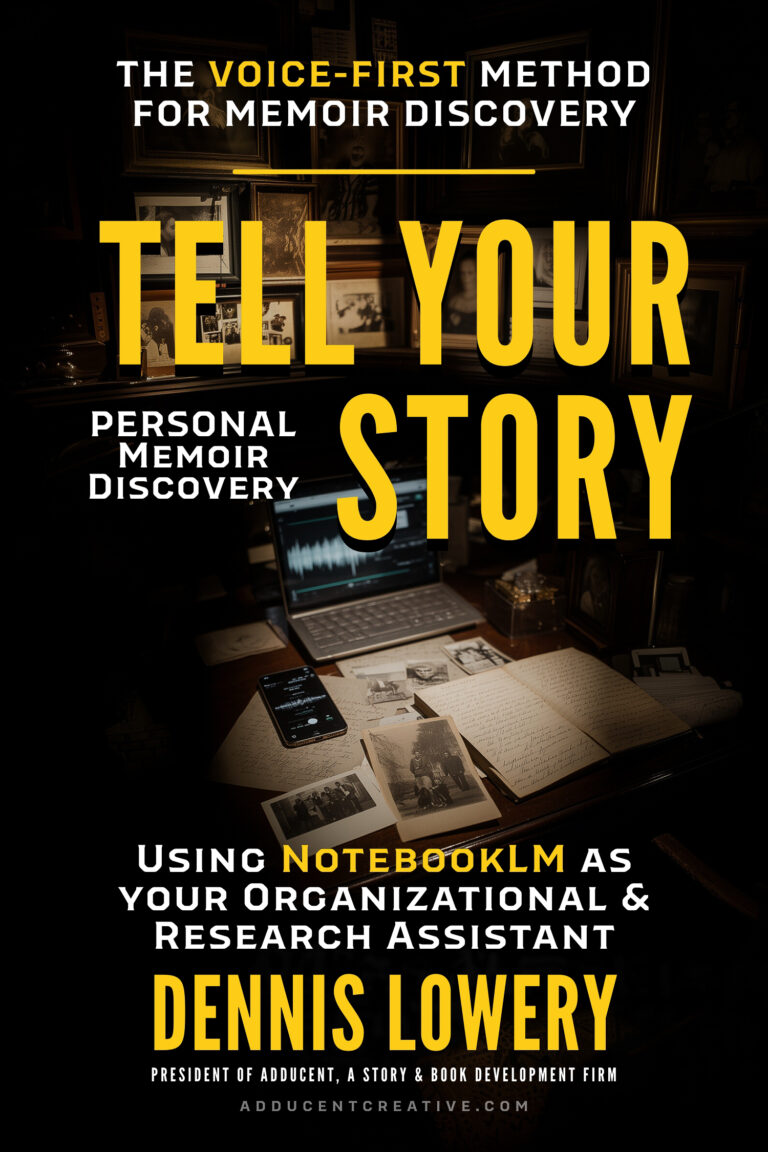
TELL YOUR STORY: The Voice-First Method for Memoir Discovery

0

What memoir writing can be, rather than where it typically goes wrong.

Instead of staring at blank pages, wondering ‘How do I start?’ this systematic approach helps you build a complete foundation of organized memoir material through voice discovery and AI-assisted analysis.

Available For Order Now

Strong beginnings increase the odds of a strong finish. Most memoir writers skip the essential foundation work and jump straight to writing, which is like trying to cut down a tree with a dull ax.

“Give me eight hours to cut down a tree and I’ll spend six sharpening my ax.” – Abraham Lincoln

TELL YOUR STORY is your ax-sharpening process for memoir development. Before you write a single sentence, you’ll discover, organize, and structure the authentic material that makes a compelling memoir possible.

This breakthrough methodology uses systematic voice recording sessions and AI-assisted analysis to excavate the memoir material hidden in your spoken memories. Instead of staring at blank pages, wondering “How do I get started?” you’ll build a complete foundation of organized, compelling narrative content ready for efficient memoir development.

What Makes This Foundation-Building Approach Different:

  • Voice Discovery Protocols: Specific recording techniques that access emotional memories you can’t reach through traditional approaches
  • AI-Powered Analysis: Learn to use NotebookLM and other tools to spot patterns, themes, and narrative structures in your content
  • Ethical Framework: Clear guidelines for protecting family relationships while telling your authentic story
  • Family Integration: Methods for collaborative discovery that strengthen family bonds
  • Complete Methodology: Takes you from scattered memories through writing-ready memoir structure

Perfect For:

  • Anyone who believes they “don’t have enough material” for a memoir
  • Those who have “too much” and need a means to organize and better utilize what they have
  • People whose previous memoir attempts felt stilted or fake
  • People whose previous attempts stalled and were left unfinished
  • Those wanting to preserve family stories and generational wisdom
  • Writers ready to blend cutting-edge AI tools with personal storytelling
  • Anyone who wants their memoir writing process to be thorough and efficient rather than overwhelming

Dennis Lowery is president of Adducent, a Story & Book Development firm established in 2000. Over 25 years in business, he has ghostwritten 40 books—including nine memoirs spanning eras from World War II through the present day. His company has also published 106 titles, several dozen of which were memoirs, and has edited and helped develop dozens more. His clients include scientists, medical doctors, CIA officers, military admirals and generals, Fortune 500 executives, university professors, a US Senator and Congressman, and CEOs of multi-billion-dollar companies. This systematic approach to memoir foundation development emerges from decades of helping high-level professionals discover and organize their most important stories.

Every life contains an extraordinary story. This book shows you exactly how to find it, organize it, and prepare it for powerful memoir writing.


Limited-Time Introductory Pricing:

We’ve set this launch price deliberately low for a short period because we want feedback from early readers as we refine the methodology for work on other nonfiction projects. This pricing won’t last—once we incorporate initial feedback and move beyond the introductory phase, the price will increase significantly.

FREE PDF Version: Send your order confirmation to Admin@Adducentinc.com, and we’ll send you the complete 8.5×11 PDF version—perfect for reference during your memoir development. (We only use your email for PDF delivery.)

Free Updates Included: Everyone who buys at this introductory price gets the updated version that incorporates feedback from early readers—no extra cost.

Act Now: Secure your copy at this limited introductory price and join the memoir writers discovering that proper foundation work transforms the entire writing experience.


Your memoir journey starts with the right preparation. This tested methodology helps you build that foundation with both authenticity and systematic precision—so when you do start writing, you’ll have everything you need for success.

Key Takeaways

  • This article presents a systematic approach to developing content for memoir writing, emphasizing the importance of foundational work before beginning to write.
  • The methodology utilizes voice discovery protocols and AI-powered NotebookLM analysis to uncover and organize memoir material.
  • It supports both novice and experienced writers, offering methods for gathering, structuring, and enhancing personal stories.
  • The introduction includes a limited-time pricing offer and a free PDF version to help readers with their memoir development.
  • Overall, this approach aims to make the memoir writing process thorough, efficient, and authentic.

WHAT REMAINS (A Creative Nonfiction Series)

A Series by Dennis Lowery

Key Takeaways

  • Dennis Lowery’s series, WHAT REMAINS, captures unresolved events through literary nonfiction vignettes.
  • These vignettes focus on the emotional impact of real events, exploring what lingers after the noise fades.
  • Lowery emphasizes storytelling’s power to reveal deeper truths, using first-person narratives to engage readers.
  • The work underlines the significance of emotional experiences and the storytelling process.
  • Readers can access the stories on Dennis Lowery’s writer site.

Headlines report what happened. But some events are too strange—or too unresolved—for them to carry the weight.

In WHAT REMAINS, Dennis Lowery creates a series of literary nonfiction vignettes—snapshots drawn from real events. They are not retold point by point, but paused in their aftershocks, listening for what still lingers.

There is no embellishment. No fiction. Only what remains in the quiet—or disquiet—between fact and the meaning we give it.

A storyteller by vocation, Lowery has long believed in the power of story not just to entertain, but to reveal what lies beneath the surface. Each vignette begins in fact, reconstructed through research, records, and reporting. Written in the first person—not because he was there, but so the reader can be—the pieces trace the emotional shape of what happened: what unsettles, what endures when the noise fades… what remains.

Two quotes guide the work:

“When we want mood experiences, we go to concerts or museums. When we want a meaningful emotional experience, we go to the storyteller.” —Robert McKee

“If history were taught in the form of stories, it would never be forgotten.” —Rudyard Kipling

In WHAT REMAINS, Lowery writes not in full, not forever—only in the way certain things refuse to let go.


You can read them here, at Dennis Lowery’s writer site.

ABOUT The Creative Nonfiction Blueprint

0

Key Takeaways

  • The CREATIVE NONFICTION BLUEPRINT is a practical method developed over two decades to help authors write serious creative nonfiction (including how to transform standard nonfiction into creative nonfiction).
  • It addresses common issues like disorganized material, unclear narratives, and continuity problems in manuscripts.
  • The Blueprint provides a flexible framework that respects individual author styles while ensuring structure for a cohesive book.
  • It aims to elevate the author’s voice and authority, resulting in a publication-ready manuscript.
  • For more information, authors can contact the development team for support.

Our CREATIVE NONFICTION BLUEPRINT is a practical method developed over two decades of writing—helping others write and publish—serious nonfiction.

It’s built on what we’ve learned working from:

  • 100+ published titles
  • 40+ ghostwriting assignments
  • Dozens of editorial and development projects

This method wasn’t built in theory. It was forged in practice—developed over years of working closely with professionals, advisors, researchers, and subject-matter experts who had something important to say, but needed help shaping their material into a cohesive, engaging book.

Over the years, we’ve seen the same issues surface again and again:

  • Source material scattered across articles, reports, transcripts, and personal notes
  • No source material at all, requiring complete development
  • Disorganized or improperly formatted manuscripts that are difficult to work with
  • Drafts written in fits and starts—without a clear narrative arc
  • Repetition across chapters—even when worded differently—making the manuscript feel redundant
  • Storylines that lack continuity or drift off course
  • Critical ideas buried beneath technical explanation or institutional phrasing

The Blueprint was created to solve these problems. It brings order to complexity, surfaces the core narrative, and ensures the author’s voice and purpose remain clear throughout.

The result is a clear, cohesive manuscript that reflects the author’s authority and speaks with clarity and purpose.

It’s not a one-size-fits-all formula. It’s a flexible framework that respects how each author thinks and works, while also providing the structure needed to shape a complete, publication-ready book.

It reflects years of story development and editorial problem-solving: patterns that build strong books, and pitfalls that quietly weaken them.

It’s built to carry your material from early draft to finished manuscript—deliberately, efficiently, and with your voice intact.

If you have insight, experience, or expertise—and the intent to share it in a meaningful way—this is how we help authors finish the kind of book others want to read… and remember.

Want to learn more… contact us.

COMPASSION And COMMAND

0

Our latest nonfiction under our BOOKNOLOGY imprint.

BOOKNOLOGY ADDUCENT imprint brand logo

Available For Order Now:

Amazon

Barnes & Noble

COMPASSION And COMMAND Bill Ault

Key Takeaways

  • The book ‘Compassion And Command‘ by Bill Ault helps new managers find balance in their leadership styles.
  • It provides clear strategies and insights for managing performance while maintaining humanity.
  • Ault shares proven tools from his experience as a manager, CEO, and coach.
  • Readers will learn to tackle challenges like confrontation and decision-making with empathy and authority.

About The Book

MOST NEW MANAGERS DON’T FAIL BECAUSE THEY DON’T CARE.

THEY FAIL BECAUSE THEY’RE TOO COMPASSIONATE OR TOO COMMANDING.

In COMPASSION And COMMAND, Bill Ault hands you the playbook to find the balance that works.

If you’re a new manager or even a seasoned one still figuring it out, this book shows you how to build a management style that commands respect and keeps your humanity intact.

No fluff. No jargon. Just clear strategies, honest insights, and proven tools from someone who’s been there: on the ground as a manager, in the trenches as a CEO, and now as a coach helping others thrive.

You’ll discover how to develop your authentic management persona, manage performance, and lead a team without burning out or becoming the type of boss you hated. And whether you’re naturally too nice or a bit tough, you’ll learn how to lead with heart and backbone.

You’ll tackle your biggest challenges with empathy and authority: confrontation, decision-making, managing problem people, and even letting folks go with confidence and care.

If your promotion came without an instruction manual, then COMPASSION And COMMAND is your real-world guide to doing the job and doing it well.

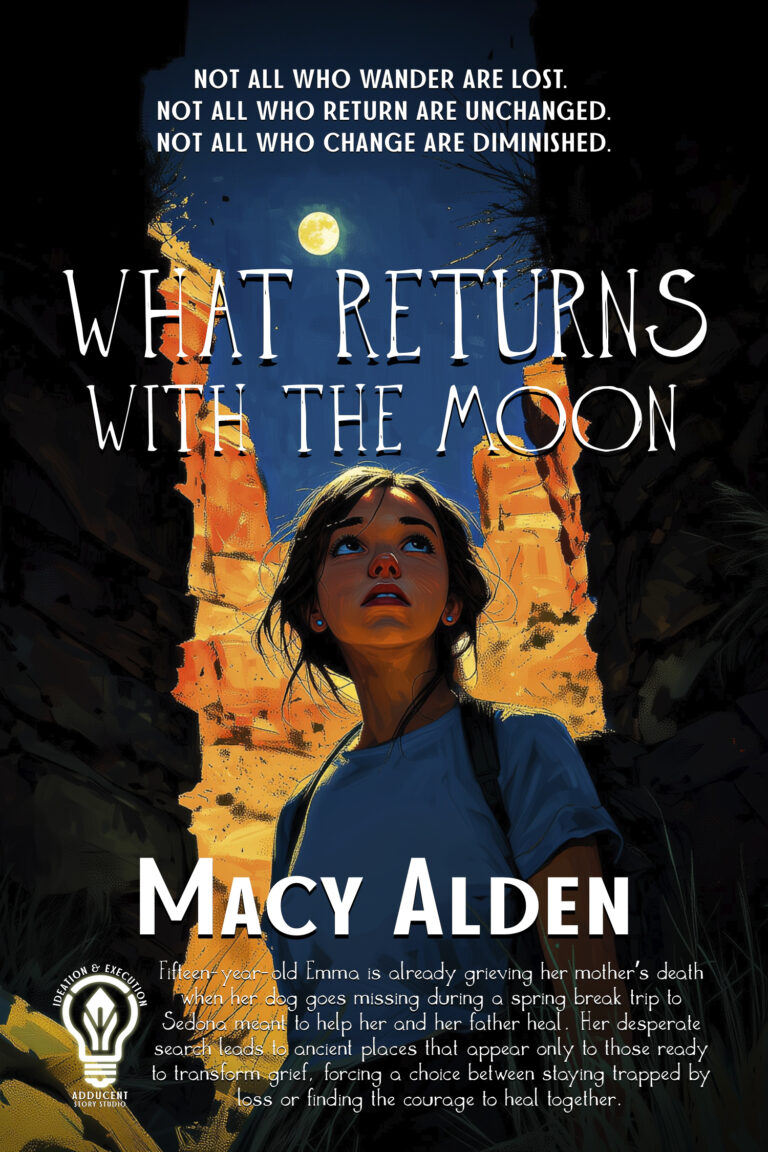
What Returns With The Moon

Fifteen-year-old Emma is already grieving her mother’s death when her dog goes missing during a spring break trip to Sedona meant to help her and her father heal. Her desperate search leads to ancient places that appear only to those ready to transform grief, forcing a choice between staying trapped by loss or finding the courage to heal together.

From Our Story Studio

ADDUCENT STORY STUDIO Ideation And Execution

About The Story

It’s been a year since her mother’s death, and fifteen-year-old Emma and her father can’t seem to get past the grief that’s shut down their relationship and their healing.

When her father insists on taking her to Sedona for spring break—one of her mother’s final wishes, believing it’s a place where they can heal—Emma resents the forced trip. But when he drops a bombshell about a job that could uproot their entire life, she realizes he’s making decisions without her again. Just like he did when her Mom was dying.

But the desert holds mysteries that will change everything.

When their dog Lillie disappears in the red rock wilderness, Emma’s desperate search leads her to places that shouldn’t exist and people who understand loss in ways that seem impossible. A mysterious fox appears when Emma needs guidance most. And somewhere in the desert, a hidden place waits for those who are truly lost, containing what they need to find their way.

As her father’s deadline approaches, Emma must choose between staying frozen by grief or finding the courage to move forward. But in Sedona, moving forward might mean discovering that love doesn’t disappear, it just changes form.

A story of family, healing, and the mystical connections that guide us home when we’ve lost our way.

Perfect for readers who loved the emotional depth of Where the Crawdads Sing and the mystical hope of The Midnight Library.

READ THE STORY