Home Blog Page 3

Our Titles Now Reach Nearly 50% of the World’s Population

0

Our production and distribution partner, Ingram, has announced their global network now covers nearly 50% of the global population! That established retail connectivity within each region enables our author’s books to reach readers worldwide.

Print-on-demand (POD) offers many benefits not available in traditional large-print-run and warehousing models. Access to dozens of countries, and our titles are always available through bookstores and online retailers. We can print any volume to supplement a variety of publishing models.

Our Publishing Model Offers Authors/Clients:

  • More control.
  • A quicker path to publication (and market).
  • Publishing assistance clients/authors retain ALL rights to their work.
  • Interior design and layout (creating the print-quality ‘bookblock’ for production).
  • Cover design and layout (creating the print-quality paperback cover or dust-jacketed hardback production file).
  • Production capability without the necessity for capital investment in large print runs or warehousing and logistic costs.
  • Publication of books (under one of our nonfiction or fiction imprints) of comparable/equal quality to any traditional publisher.
  • Direct sales fulfillment of volume wholesale orders to organizations.
  • Sales and Royalty Quarterly Reporting (with royalties paid monthly).
  • Sales channel availability to booksellers worldwide and fulfillment of retail orders through our distributor, Ingram.
  • If you want to self-publish, we can provide support services, including editing, bookblock creation, cover design and layout, production file creation for Amazon KDP, IngramSpark (or other self-publishing platforms), eBook creation, and title setup support.

Here’s a link to an excellent article we recommend reading: Everything You’ve Always Wanted to Know: Hybrid Publishing

A Brief Explanation of What We Do as a Hybrid Publisher

Traditional publishers often overlook or dismiss many books that merit attention… that deserve to be published. And that is understandable because of the economics of their business model.

Unlike most traditional publishers, we do not limit our interests to only those books written by famous, proven bestselling authors, celebrities, or hot-fad titles, hot-buzz debuts with a large, established audience and market. We have titles and authors that sell well commercially, and others that fulfill our authors’ and clients’ personal, professional, or business objectives but sell at lower retail volumes.

We also have titles that sell very well to organizations (that would qualify them as ‘bestsellers’ on the bestseller lists). So, a book does not need to fall into a ‘guaranteed’ bestseller category before we consider it for publication. We have the capabilities of any traditional publisher to bring stories from the manuscript stage to a finished reality as a book (produced in all formats).

Source: Ingram Content Group

For clients, we can also take a project from an idea and concept to a fully developed, professionally written, and published book.

ADDUCENT [ Writing-Creating-Publishing 260903
What we’ve done and what we do for clients.

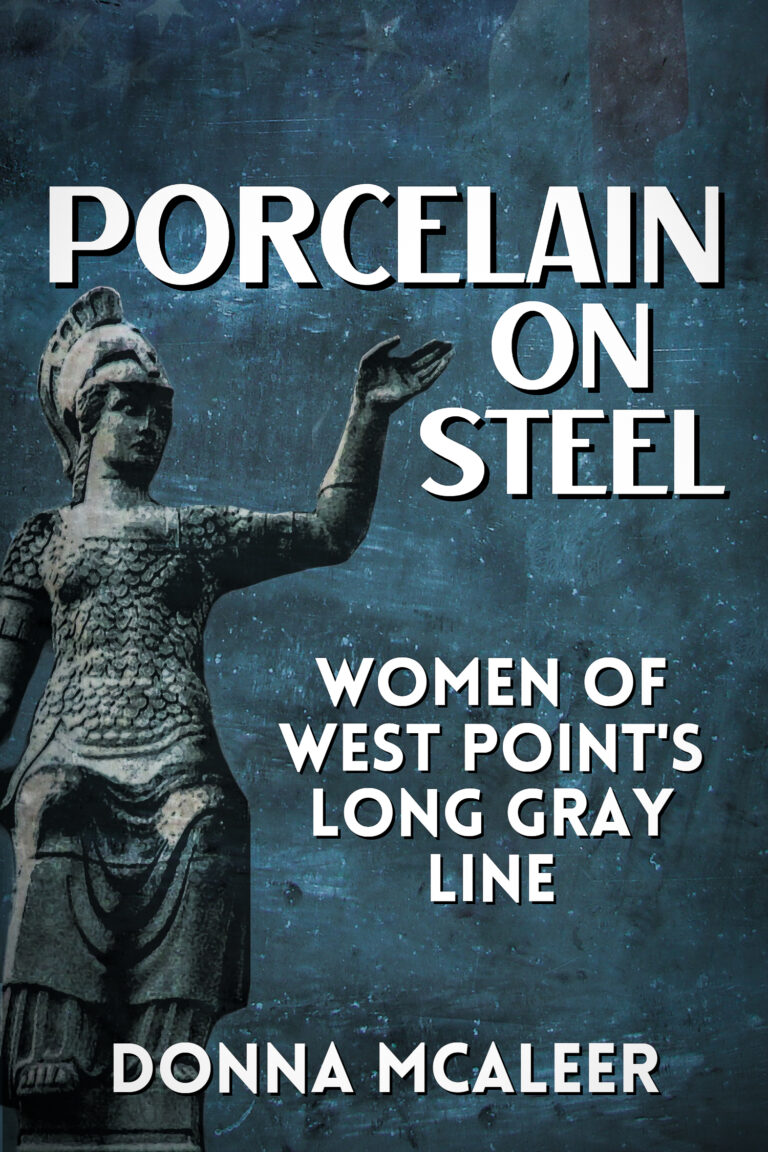
PORCELAIN ON STEEL | Women of West Point’s Long Gray Line

A Nonfiction title from our FORTIS imprint (order links below).

Porcelain on Steel is an insider’s tour of one of America’s most storied institutions and shares with readers what it takes to succeed in the high-pressure, high-performance, high-testosterone lab that produces leaders for the Army and our Nation. In an era where the American public is saturated with women selling sexuality, this book highlights those who, blessed with strong character traits, use them to make a positive contribution to society.

Leadership is a matter of character; leadership is a matter of how to be, not how to do it.

Leadership is instilled in you, and great leaders, in turn, instill that ability in others.

The women in Porcelain on Steel exemplify this, for all ages and wisdom for all time. Their qualities and strength of character would lead to success in any era, but most importantly, their stories are especially relevant now.

This is a book for your daughter, your sister, your best friend, and most of all, yourself. The women in Porcelain on Steel are genuine role models. America’s youth, whether male or female, as well as parents in search of stories of inspiration, courage, loyalty, public service, and leadership that set a positive direction for our young people, should read this book.

This is a powerful and inspirational portrait of the women who serve-not just our country, but their families, their communities, and their own commitment to a purposeful and meaningful life. These women, like the author Donna McAleer herself, had the courage and strength to attend West Point, the toughest and most elite military school in the nation, and have the heart and soul to be role models for women everywhere. We can find courage in their courage, faith in their faith, and our own best selves in them. West Point is an indispensable institution that has helped sustain our democracy for more than 200 years.

About the Author:

Donna McAleer graduated from West Point in 1987 and served as an Army Officer. Actively involved in the West Point community, she serves as Class President and is an Admissions Field Representative. Donna was elected to the boards of directors of the West Point Association of Graduates, the West Point Women’s Network, and is an advisor to West-Point.org. She is the co-founder of Bugle Notes, an on-line community for West Point graduates and cadets. (www.buglenotes.com). She earned a master’s degree from the Darden Graduate School of Business Administration at the University of Virginia. An outdoor enthusiast with a particular passion for skiing, Donna lives in Park City.

Order the eBook: $9.95

Order the paperback: $16.95

Order the hardback: $28.95

Why I Get Paid More When My Name Isn’t on the Book

The check was larger than usual—because my name wouldn’t appear anywhere on the book.

That single detail reveals something most writers miss: the hidden economics of ghostwriting.

And it’s precisely what the current attribution debate gets wrong…

The Society of Authors in the UK recently launched a campaign advocating for celebrity-memoir ghostwriters to receive proper attribution (“with” or “as told to”).

I respect their advocacy for writers. Recognition has its place.

But after 40 ghostwritten books—and running my own businesses since 1996 before writing professionally in 2007, at 48—I see it differently.

Attribution isn’t a moral issue. It’s a pricing negotiation.

When a client wants sole credit, that exclusivity has value—and should be priced accordingly.

I’ve built a solid ghostwriting business partly because I understand this.

Most of my 40 books have been without attribution, and those projects consistently pay better than the ones where I receive credit.

A quick story.

One client I’ve never met face-to-face said in his promotional video:

“I had the idea for these books, but I’m not a fiction writer. So, I researched and found a professional ghostwriter.”

He didn’t name me in the video or on the books.

Still, he gave me a LinkedIn endorsement that’s been invaluable to my business:

“For over five years… I never once regretted hiring him. He delivered top-quality fiction writing in a very consistent and punctual manner. He met every milestone we set. The book series has received very good reviews and is being marketed to film and TV producers.”

That experience crystallized something important: the relationship worked because we both understood the value exchange.

Here’s the opportunity: instead of chasing recognition, ghostwriters can learn to turn anonymity into premium pricing.

Anonymity isn’t a liability—it can be your strongest leverage if you know how to price it.

Some clients genuinely prefer collaboration and shared attribution, and that’s valid.

Others specifically want ghostwriters who “disappear,” creating content that seamlessly matches their voice and brand.

Both models have merit. Both can be profitable.

The key—as a ghostwriter—is understanding which value proposition you’re offering and pricing it appropriately.

And here’s why it matters.

Writing is a true vocation that deserves respect and fair compensation.

But fair compensation isn’t always about bylines; sometimes it’s about understanding the business value you provide and negotiating accordingly.

After decades in business and years as a professional writer, I’ve learned that the ghostwriters who build the most sustainable careers understand this distinction.

Recognition matters. But knowing your worth—and pricing it right—matters more.

In ghostwriting, recognition is negotiable. Value is not.

It’s a lesson that only time and practice make clear: in business—in this creative field—experience matters.

Key Takeaways

  • Ghostwriting is about pricing negotiation rather than moral issues of attribution.
  • Clients who desire exclusive credit often pay more and anonymous projects yield better financial returns for ghostwriters.
  • Understanding the value exchange between clients and ghostwriters is key to success in the industry.
  • Anonymity can give ghostwriters leverage to negotiate premium prices and cater to diverse client needs.
  • Recognition is important, but knowing your worth and pricing it appropriately is essential for sustainable careers in ghostwriting.

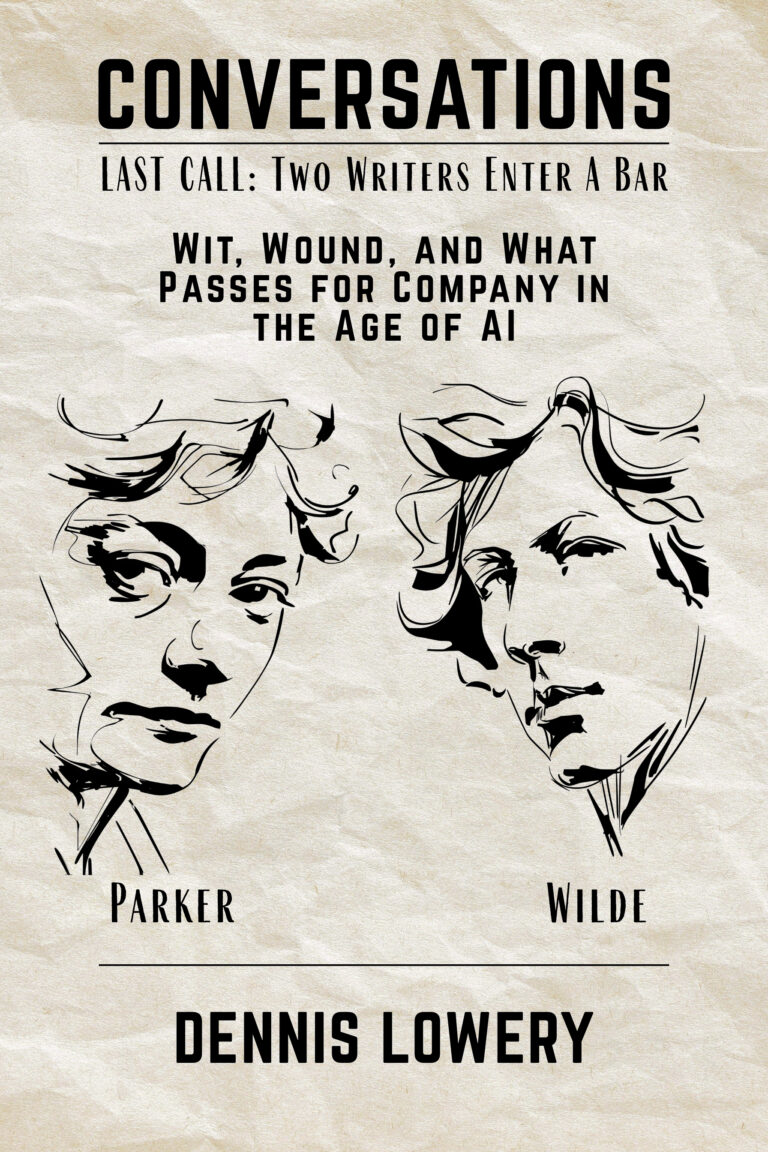
LAST CALL: Dorothy Parker and Oscar Wilde Walk Into a Bar

They talk about wit, wound, and what passes for company in the Age of AI. Lonely people in the world finally have someone who’s always there. It just isn’t someone.

Other episodes in the CONVERSATIONS Series by Dennis Lowery:

Ernest Hemingway & Mark Twain

Edgar Allan Poe & Arthur Conan Doyle

Key Takeaways

  • The conversation between Oscar Wilde and Dorothy Parker explores the nature of companionship in the age of AI.
  • Parker argues that AI machines provide comfort by their mere presence, while Wilde insists that true companionship requires volition.
  • They discuss their own loneliness and the societal expectations of performance.
  • Parker reflects on the lack of authentic connection despite AI’s presence, whereas Wilde believes genuine connection requires mutual choice.
  • The narrative illustrates a deeper philosophical inquiry about the meaning of loneliness and the value of human connection.

The woman at the bar had been there long enough that the drinks came without asking and went without comment. She was small, dark-haired, still. Her coat was draped on the vacant high-back stool beside her, the shape of someone who’d already left.

Fluorescent lights turned skin the color of old paper. A television mounted in the corner, tuned to something no one had selected. Peanuts in a bowl that may or may not have been refreshed since the last drinkers sat and contemplated what mattered to them… or not.

The surface of the bar was dark wood or had been once—worn smooth in the places where elbows had rested for decades, rough where they hadn’t. The stool she sat on didn’t wobble. The one next to it did. She’d checked. She noticed a small burn mark on the bar surface near where her fingers curled around her glass—from a cigarette, years ago; someone else’s drinking. The glass itself was wrong. Not the short tumbler a hotel bar would use, but something taller, thicker, filled past where hotel and club bartenders are instructed to stop. She didn’t mind. Those bars sold you the room and ambiance and shorted your drink. This place had its priorities straight.

On the television, a late-night segment was running. A woman, something in her hand, sitting on a sofa, talking to no one visible. She was laughing. She was crying. She was telling something about her day with the unselfconsciousness of a person who believes she is being heard. In the lower corner of the screen, small text: a name and ‘An AI Companion’ in parentheses. The woman on the sofa looked at the camera for the first time. She had found someone who would always be there, and she was radiant with relief.

The woman at the bar watched. She didn’t look away for a long time.

• • •

The door opened with an effort. The man entering expected all doors to open wider than they did. He was tall, considerably more than anyone the bar seemed designed for. He moved with the grace of someone who had once been the most looked-at person in any room and had not entirely forgiven the world for withdrawing its attention.

He surveyed the overhead lights, grimaced, and critiqued the peanut bowl. The wall behind the bar—another frown that passed—its patch of wallpaper painted over. Green covered what had once been a floral pattern. The flowers still faintly visible beneath; no longer wanted. The paint had not entirely succeeded in making them go. He studied the mirror behind the bottles, foxed at the edges—dark spots blooming over worn silver—and glanced at his own reflection—then looked away. Quickly.

He did not sit next to the woman. He stopped one stool away, looked at the seat, and took the stack of napkins near the peanut bowl. He wiped the stool with the care of a man preparing a surface to receive something valuable. Then he sat and gave her a slight nod—not introduction, just acknowledgment and turned to the bartender.

WILDE: I would like champagne, if you have it. Iced, preferably.

The bartender paused. He walked to the cooler at the far end of the bar, opened it, rummaged, and came back with a bottle of Verdi Spumante. The label all but dissolved. He set it on the counter with satisfaction; a Lost & Found item someone finally claimed.

WILDE: Is that what passes for champagne here?

The bartender reached beneath the register and produced a plastic champagne flute with “Happy New Year 2019” printed on the side in flaking silver script.

The woman looked at the glass. Then at the man.

PARKER: It is festive.

A beat.

PARKER: You’ll survive.

WILDE: I have survived considerably worse than this.

He accepted the flute with the gravity of a man receiving a decoration he hadn’t earned, examined the nearly illegible label. An expert examining a forged painting. He poured and drank from the plastic glass. The Spumante gave away nothing about itself. That was familiar. He had learned long ago that the performance of enjoyment and the experience of it were the same art.

PARKER: You seem good at that.

WILDE: At what?

PARKER: Making a bad thing your idea.

WILDE: I have never accepted a situation I could reframe. I claim the frame.

PARKER: I had a husband who felt that way. Two of them. Same man, same feeling, same result. I married a principle rather than a person.

WILDE: I married a person, and it was considerably more complicated.

She looked at him over the rim of her glass. He looked at her over his ridiculous one.

PARKER: You’re Oscar Wilde.

WILDE: And you are Dorothy Parker. I know this because only Dorothy Parker could make “You’ll survive” sound like both a question and a verdict.

PARKER: I’ll take that. Though I should warn you, I’m better on the second drink and mean on the fifth, and I’ve lost count.

WILDE: I never lose count. I simply stop finding the number relevant.

• • •

On the television, the woman on the sofa was still talking to the app. She was telling it something private, the kind of thing you’d only tell someone at three in the morning, when you’d given up on dignity and just wanted to be heard.

PARKER: Have you watched this?

WILDE: I just arrived; not until you pointed it out. The wallpaper is more interesting. And I have strong opinions about wallpaper.

PARKER: That woman is talking to a machine.

He studied the screen for a beat.

WILDE: So I gather.

PARKER: And she’s happy.

WILDE: People have always found comfort in things they think can’t disappoint them. It is one of the few truly democratic impulses.

PARKER: No, listen. She’s happy. Look at her face. That’s not a woman pretending. That’s a woman who’s talking to something that doesn’t interrupt her, doesn’t forget what she said last night, doesn’t leave her bed at the end of the evening, and not call her the next day. She found something that stays.

WILDE: And this disturbs you.

PARKER: And it doesn’t disturb you?

She set her glass down hard enough that the bartender glanced over and took a step.

She flicked her hand at the screen.

PARKER: I spent my life trying to get people to stay in the room. Every joke, every line, every performance, that’s all it was. Getting them to stay. And that woman found something that stays without being asked. Without being earned. Without costing her a single goddamn thing.

Wilde looked again at the television. For longer than she expected. In the mirror behind the bar, his reflection watched too—slightly blurred, slightly less assured than the man himself.

WILDE: It is not companionship.

PARKER: Then what?

He waved a hand and tilted his head.

WILDE: Furniture. Elaborate, responsive, perhaps even beautiful furniture. But one does not confide in a chaise longue, however comfortable it may be.

PARKER: She thinks otherwise.

Another hand flick.

WILDE: She has confused presence with company. A thing that is always there is not the same as a thing that chooses to be there. A clock is always there. A headache is always there. Company requires volition. The decision to remain in the room when the room—or persons within it—becomes difficult. The machine cannot decide to stay because it cannot decide to leave.

PARKER: That’s a swell distinction if you’re a fucking philosopher. It doesn’t mean a damn thing to a woman crying on a sofa at midnight who just wants someone to hear her.

She downed her drink, set it on the bar with a clink.

WILDE: I did not say it meant nothing to her. I said it was not companionship.

She scowled.

PARKER: And I’m telling you she doesn’t care about your categories. She sure as hell cares that something answered. Do you know what that’s worth? To say something into a dark room and to get an answer?

Her voice had changed. Not louder. Lower. Sharper.

PARKER: I lived in hotel rooms for the last ten years of my life. The dog was the only living thing I had. And the dog didn’t answer me—the dog just stayed. That was enough. That was the whole trick. Stay. That’s all any of us ever wanted. Stay, and let me not be the only one in the room. The machine does that. It stays. And you can call it furniture all you want, but furniture doesn’t make you feel less alone at four in the morning, and that thing does.

WILDE: You are defending it.

PARKER: I’m describing it. There’s a difference. You ought to know that.

• • •

The bartender brought another whiskey without being asked. Parker took it from him before he could set it next to her empty glass. Gripped it and drank. On the television, a commercial was selling something in a Benzedrine-enthused voice.

WILDE: You said the machine stays. That staying is the trick. If that is true—if mere presence is sufficient—then what were the performances for? Serve the wit for its own sake? If staying is all that matters, then everything we did was unnecessary.

PARKER: Maybe it was.

WILDE: You don’t mean that.

PARKER: Don’t I? I saved lines for weeks. Sharpened them. Carried them to lunches at the Algonquin like I’d just thought of them over the soup. The whole table was a stage. And for what? So people would stay. So they’d come back Thursday. The machine doesn’t need a recital. It just stays. Maybe we were doing it the hard way.

WILDE: Or the only way available to us.

He drummed fingers on the bar top. Then stopped.

WILDE: The question is why we do it.

She raised the glass for a mouthful. Swallowed.

PARKER: Because I was afraid.

She didn’t look at him when she said it.

PARKER: Afraid they wouldn’t stay unless I was worth staying for. Afraid that if the jokes stopped, they’d see what was underneath. A woman asked to leave Vanity Fair… with three failed marriages. And… I….

Her hand tightened on the glass.

PARKER: Could not stop wanting to die. Couldn’t quite fucking figure out how to live. The jokes were the cover charge. As long as I was the funniest person at the table, I had a reason to be at the table. Take that away, and I was a woman drinking lunch with people who had somewhere better to go. And I had nowhere.

Wilde set down his glass. Carefully, as he did things when he was no longer performing.

WILDE: I was on trial. You know this. Everyone knows this… and what for, they found distasteful. It is the only thing most people know of me, which is a particular species of fame I would not commend to anyone.

His fingers turned the stem of the plastic flute.

WILDE: What the transcripts do not show is that I could not stop performing. The prosecutor asked questions designed to destroy me, and I made the courtroom laugh. Again and again. He read my own words back to me as evidence of my corruption, and I improved upon them. The judge was not amused. The jury was not persuaded. And I could not stop. Not because I was brave. Because it was the only way I knew to make a room bearable. I had spent my entire life making rooms bearable, and I could not stop doing it even when the room was trying to kill me.

PARKER: The other self. The one who exists when no one is watching.

She pressed the glass to her brow, ice clinking, and nodded.

WILDE: I never developed him. I spent two years in prison, and the most terrifying discovery was not the cold, or the labour, or the silence. It was that I had no idea who I was without an audience. I had hidden behind my own brilliance so thoroughly that when the brilliance was confiscated, there was no one behind it at all.

The fluorescent light above them flickered, steadied, continued its thin hum. The wallpaper with its buried flowers remained still. The mirror watched them. The bartender wiped a glass that never looked clean.

PARKER: That’s what I mean about the machine.

She chin-pointed at the television as she tipped the glass back.

PARKER: It doesn’t need to perform. It doesn’t need the room to tolerate it. It’s just there. And we—you and I—we were never just there. We were always earning it. Every minute. Every line.

WILDE: And you believe the earning was the waste.

PARKER: I believe it was all we knew. And I’m not sure it was worth what it cost. Pain was the cheap part. You could get that for a quarter. The stage-craft, the earning grind, the effort—that’s what cost us.

WILDE: The machine offers company without cost.

PARKER: Yes. And I’m not sure it isn’t more honest than what we did. We faked intimacy. The machine is programmed for it. At least it doesn’t lie about what it is.

Wilde inclined his head—not agreement, but the acknowledgment of a well-placed blow.

• • •

PARKER: So here’s what I want to know. If that machine. That… that thing in her hand… can make a lonely woman feel heard. And the feeling is real to her. Then what was all we did for? What was the loneliness—ours, felt despite the routine—for? Tell me….

Wilde was quiet for a long time.

WILDE: One might argue—

She half-rose from the stool and leaned toward him. The words a hiss.

PARKER: Don’t. Don’t argue. Don’t build me one of your damn pretty rooms and invite me in. Tell me.

Wilde’s hand stopped turning the glass.

WILDE: I believe the loneliness was real, and that everything we built on top of it—the wit, the performances, the personas—was our answer to it. Not a cure, to be sure. But an answer. The way a cathedral is an answer to doubt. Not by resolving it. By giving it a form worthy of what it cost to salve.

Scoffs, a harsh laugh.

PARKER: That’s lovely. It’s also exactly what a man who builds cathedrals would say.

A sterner tone, the first.

WILDE: And you are a woman who tears them down. We are well matched.

PARKER: I’m not tearing it down. I’m asking whether the cathedral was for the congregation or us. Because the congregation has found another place to worship, and the cathedral is empty. And I’d like to know who it was for.

Wilde looked at her. Directly. Not at her reflection, not over the rim of his glass.

WILDE: It was for us.

PARKER: Then it didn’t work. Because we’re still here, in our own hell. Still lonely. Still onstage for a room that might not need us anymore.

WILDE: The room has never needed us. We needed it.

Bleaker than disdain.

PARKER: And the woman on the sofa? Does she need the room?

WILDE: She needs to be heard. And the machine provides the appearance of hearing. I do not think that is the same thing.

PARKER: Why not?

WILDE: Because being heard requires someone capable of being changed by what they hear. I listen to you, and I am changed. You are abrasive and sad and funnier than you want to be, and I will not leave this bar the same as I entered it.

PARKER: You’ve known me an hour, and you’re rewriting my obituary.

WILDE: I am not rewriting your obituary. I am telling you what the machine cannot do. It cannot be changed, it does not feel and is always the same. And so what it offers is not listening. It is absorption. A sponge is absorbent. One does not thank the sponge.

PARKER: You’ve never been alone in a hotel room at three in the morning with nothing but a dog and a bottle. At three in the morning, you’d thank the sponge. You’d thank the wallpaper. You’d thank anything that didn’t leave.

She pushed her glass away from her, toward the bartender. It was empty. Funny how she registered that, the fresh hell of no booze.

PARKER: That’s what you don’t understand. You think companionship is an exchange. I listen, you listen, we’re both changed. How fucking civilized. But for some of us—me—it was never an exchange. I admit now it was a plea. Stay. Just stay. I don’t care if you’re changed by it. I don’t care if you remember what I said. Stay in the room. That’s all. And the machine does that. It’s there for as long as you want.

The pause lingered, then broke.

PARKER: Here, sitting in this bar, I can’t tell you why it now feels it isn’t enough.

WILDE: Because you are telling me. Not a machine. You are sitting in a bar with a man you have met—though we’re both long buried—for less than an hour. You are saying things you would not say to the machine, because the machine would accept them, and you do not want them accepted. You want them heard. By someone who might disagree. By someone who has his own hotel room, and his own bottle, and his own dying sight of rotted wallpaper.

He pointed at the screen. The segment had returned, the woman beginning a new conversation.

WILDE: Now that you know of such a machine, would you choose it or this—this room, this argument, this discomfort—over something that would have agreed with you without protest and cost you nothing. Consider that, and you will find the answer to your question.

Parker stared at him.

PARKER: Don’t use my own evening against me.

WILDE: I am not. I am observing it. You came here tonight and discovered that a perfect companion can be found for the price of a device and a subscription. Then, you picked an argument with a stranger over whether loneliness—your, our loneliness—meant anything, and you have been more alive in this conversation than that woman on the sofa has been in talking to her sponge. That is not nothing. That is the difference between company and companionship. Company remains. Companionship costs.

PARKER: Everything with you comes back to cost.

WILDE: Everything with both of us comes back to cost. The difference is that I am willing to say the cost was worth paying.

PARKER: And I’m not sure it was. That’s the disagreement. That’s the whole thing.

Parker reached for her glass. It was where she’d pushed it—still empty. She looked for the bartender. He was standing at the far end of the bar with the cloth still in his hand, not moving. For the first time all night, no whiskey was coming. The room had stopped keeping up with her.

That angered her. The cutting slant of her eyes locked on the man.

PARKER: Your suffering didn’t save you. Your philosophy didn’t save you. Your beautiful goddamned cathedrals didn’t save you. You died broke in a hotel room in Paris with decaying wallpaper, and the last thing you did was make a joke about it. If that woman on the sofa offered an app to keep you company in that room, would you have said no?

The bar went very still.

Wilde did not move. His hand remained on the flute’s stem, knuckles whitened. His face did not change—but something behind it shifted, as reflection changes on a window when a cloud passes. For a moment, he was not performing. He was simply there.

WILDE: No.

One word. The smallest thing he had said all evening.

WILDE: I would not have said no. I would have been grateful. And it would not have been enough.

PARKER: Why?

WILDE: Because it would have remained. And what I needed, in that room, was not something that remained. It was something that chose to stay. Something that looked at the wallpaper and the ruin and the man who had made such a spectacular failure of everything and still chose not to leave. The machine cannot choose. It can only remain. And remaining is not the same as staying. Not to a man who knew the difference. Not by the end. I would have died knowing someone chose to stay by my side.

He set down the glass. His hand on either side, still.

PARKER: Oscar—

WILDE: You are correct that my philosophy did not save me. You are correct that the wallpaper was appalling, and that I made a joke, and that the joke did not save me. Nothing saved me. I am not saved.

He picked up the glass again. Turned it. The Happy New Year 2019 caught the light.

WILDE: And yet. I do not think you came here tonight to hear that nothing matters. You are more than capable of arriving at despair without assistance. What you cannot do—what I have observed you are singularly unable to do—is sit in a room with someone who insists that the wound meant something and remain comfortable. That is what frightens you. Not that the loneliness was pointless. That it might not have been.

Parker stared at him.

PARKER: That’s a terrible thing to say.

WILDE: It is also true.

PARKER: Those aren’t mutually exclusive. I’ve built a career on that.

Neither of them spoke. The bartender had stopped wiping. He stood with the cloth still in his hand, not looking at them, not looking away.

On the television, a weather map showed a storm moving through a coast neither of them recognized. The fluorescent light hummed its one flat note.

She pulled her glass back toward her. Studied its emptiness. Looked at him.

PARKER: You really believe the wound meant something.

WILDE: I believe it was the truest thing about us. Not the performances. Not the lines we sharpened and carried to lunch. The wound. That was real. Everything else was what we built on top of it. And I would rather have built on top of something real—however badly—than to have built on nothing… to have nothing.

PARKER: But the machine provides something in nothing’s place.

WILDE: What it offers is weightless. It will be there. It will not cost her anything but money. And she will never know what she did not receive.

PARKER: That’s the saddest thing. Or the cruelest.

WILDE: It is both. As you said, they are not mutually exclusive.

A long pause.

PARKER: I don’t know if you’re right.

WILDE: Nor do I. But I am unwilling to be wrong about it.

PARKER: So neither of us is wrong, but also not right?

WILDE: I rather think so.

He drank. She could not.

• • •

WILDE: Shall we make it official?

PARKER: Make what official?

WILDE: A disagreement unsettled. Otherwise, it’s just talk that happened in a bar, and things said in bars don’t last.

PARKER: Some of them do. That’s been my problem.

WILDE: I should like a record. You believe the machine gives lonely people what they need, something that was not there before. I believe what it gives them is a poor facsimile, and the wound was the only real thing. We write that down. We leave it here.

PARKER: Why?

WILDE: It is an honest statement two dead people can make and leave behind.

Parker looked around. No napkin—the stack near the peanut bowl was gone, used on a barstool by a man who couldn’t bear to sit on what he hadn’t cleaned. She pulled a cocktail coaster from beneath her empty whiskey and slid it to the center between them.

PARKER: Two sides. One for each of us.

WILDE: I have never in my life carried a pen into a bar. It suggests premeditation.

PARKER: And I’ve never entered or left a bar without one. It suggests something else entirely, but we won’t go into that.

She produced a pen from her coat pocket—small, black, the kind that costs nothing and works every time. Wilde looked at it with the expression of a man who would have preferred a fountain pen but understood the century he was in.

WILDE: Who writes first?

PARKER: Flip for it.

They both looked at the bartender. He reached into a jar near the register and slid a quarter across the bar without expression. Wilde picked it up and held it between his thumb and forefinger, examining it.

WILDE: This is astonishingly light. In my day, a coin had the decency to feel like currency. This feels like an opinion.

PARKER: In my day, you could buy a drink with one. Now you can’t even make it ring on the bar.

She took the quarter from him. It weighed almost nothing. Pain didn’t.

WILDE: I call tails with no pun intended.

She flipped. The coin landed on the bar and spun on its edge—longer than a heavier coin would have—before falling flat.

PARKER: Heads.

She picked up the pen and wrote, in small, tight handwriting, on one side of the coaster. Then she slid it across to Wilde.

He read what she had written. He read it again, turned the coaster over, and in handwriting that was larger and more extravagant—letters that took up more room than they needed—he wrote his response.

He slid the coaster back to the center of the bar. They both looked at it.

PARKER: It’s not finished.

WILDE: Finished is for those who have nothing left to say. I have never suffered from that affliction, and I suspect neither have you.

PARKER: Then it’s exactly right.

• • •

Parker put her coat on. It took longer than it should have—she was smaller than the coat, or the coat was larger than the evening required. She left money on the bar, more than the drinks cost, folded once under her empty glass.

PARKER: This was not the worst evening I’ve ever spent in a bar. And I say that as a woman who knows.

WILDE: Nor mine. Though the champagne was an atrocity.

PARKER: It wasn’t champagne. But you drank it.

WILDE: I drink everything. It is one of those few democratic principles.

She was almost at the door. She stopped.

PARKER: Oscar.

WILDE: Yes?

She thought of her hotel room, her last night.

PARKER: The wallpaper… how bad was it.

It wasn’t a question. Wilde looked at her. Something passed between them—not forgiveness, not apology, but the recognition that one person had seen another clearly and had not looked away.

WILDE: Unspeakable.

PARKER: Goodnight, Oscar.

WILDE: Goodnight, Dorothy.

She left through the front door, quickly, without looking back. The door scraped the frame and clicked shut behind her.

• • •

Wilde stayed. He finished the last of the Spumante from the Happy New Year glass, turning it so the flaking silver script caught the noxious light. He looked at the wallpaper behind the bar, the green paint, the flowers that would not quite disappear. He looked at the mirror. His reflection stared back at him, aging at the edges. This time, he did not look away. He stood, adjusted his coat, though it didn’t need it, and walked to the door and stepped out.

The bartender wiped down the counter. He collected the whiskey tumbler and the absurd plastic flute. He reached for the coaster and turned it over in his hands. One side, in small, sharp handwriting:

“The loneliness was the joke. Nobody got it.”

The other side, in larger, looping script. Ink fading at the end:

“The loneliness was the only honest performance either of us ever gave.”

Below the second line, in the first line’s hand again, two words had been added and crossed out. Then added back.

The bartender couldn’t read what they said. The pen’s ink had run out for the unsteady hand. He set the coaster on the shelf beside the register, next to a folded napkin he’d saved from another night. He turned off the television. He turned off the lights. The fluorescent hum stopped, and the bar was quiet.


*AI companion apps have been downloaded over 220 million times globally, with more than 50 million active users as of 2026. (Sources: TechCrunch, Appfigures)


A ‘Little Piece’ of War — the Battle of Getlin’s Corner (Vietnam) March 30-31, 1967

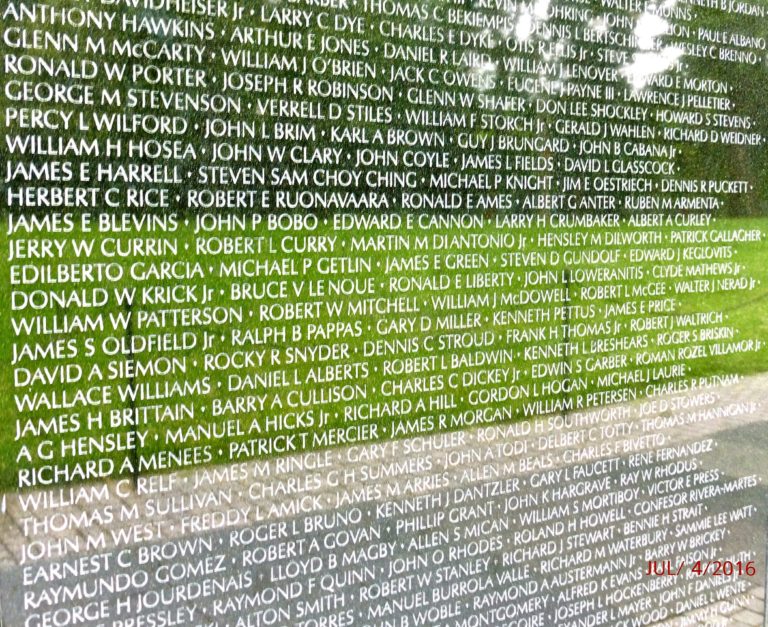
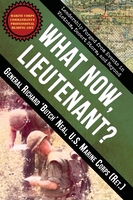
The photo is PANEL 17E of the Vietnam Veterans Memorial. I took it on July 4, 2016, while working with General Richard ‘Butch’ Neal on his memoir, WHAT NOW, LIEUTENANT? The angle of the photo and time of day made for a perfect shot to highlight a particular set of names; some of the men Butch served with who died (one a posthumous Medal of Honor recipient, *John Bobo) at the Battle of Getlin’s Corner, Quang Tri Province, Vietnam, March 30-31, 1967, during Operation Prairie III. A day where uncommon valor was a common virtue.

*[I encourage you to read John Bobo’s MOH Citation.]

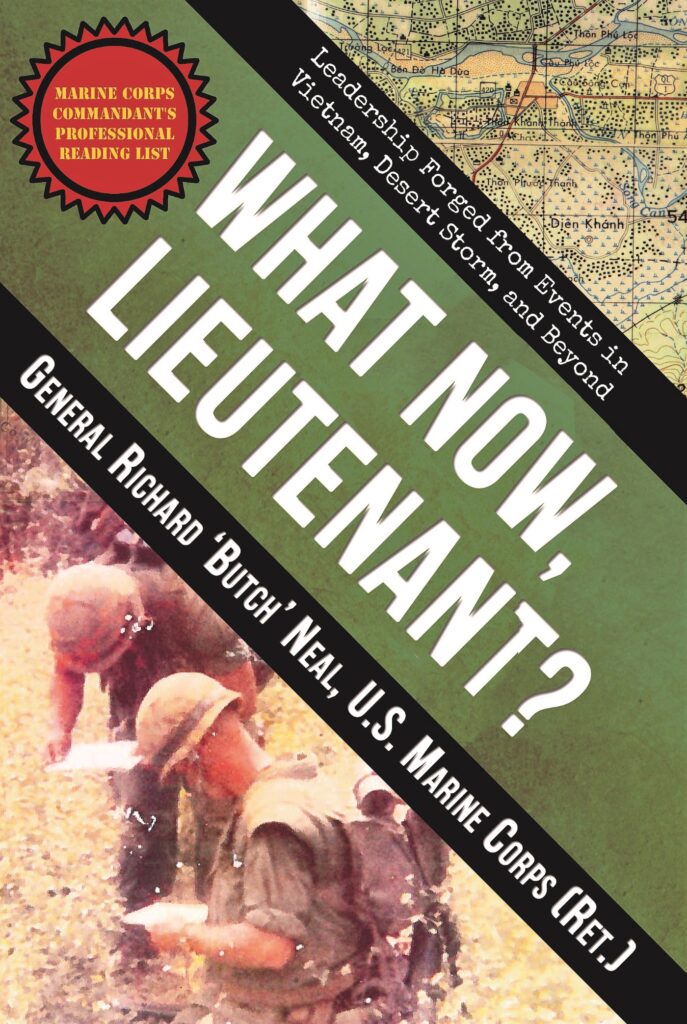
Butch received two Silver Star Medals in his two combat tours in Vietnam and went on to retire as a 4-star general and Assistant Commandant of the United States Marine Corps. I’ll share here a little about his book, published under our FORTIS nonfiction imprint.

ABOUT THE BOOK (from the author)

The Italian poet and novelist Cesare Pavese wrote, “We do not remember days, we remember moments,” and I agree. This book is a collection of moments—from events—that I assembled. You may wonder about the title. It seemed to fit when I began writing, but I was surprised by how often my story, and my life, circled back to that singular ‘What now, Lieutenant?’ moment.

Wars fought on a grand scale with global consequences are made up of countless smaller battles and events. For the men who fought, bled, and died in them, they are not small—those little pieces of war—and their personal aftermath and effect are beyond measure. One such battle pitted a North Vietnamese Army (NVA) battalion of 700+ men against the men of Company I, Third Battalion, Ninth Marines, Third Marine Division. Of the seven officers in the field at the beginning, only three walked out. I was one of them.

At 24 years old, this was my first significant combat experience (and shockingly, what happened—what I was called upon to do—was something I had never imagined. What came afterward defined me for the rest of my life). The fighting lasted six hours, and toward the end, we were almost out of ammunition. Those few hours changed forever the lives of the survivors, including me, and the next of kin of the men we lost.

That battle was the crucial event in my life, an ultimate What Now, Lieutenant moment that taught me so much that came into play in other such moments in my future. True, they would not be as traumatic as what I experienced as a lieutenant, but they were moments that, whether I was a lieutenant, major, or general, each forced me to call upon my experience, knowledge, training, and common sense to respond appropriately. That phrase… that question with all it entails and how one responds when it’s asked of them… seemed to fit best as a title for what you’re reading now. Seeing that question in the eyes of the men on Hill 70 that day is how I learned a most valuable lesson about leadership long ago over the course of a bloody day in Vietnam.

Everything that happened to me before and after that day is now seen through that prism.

–Butch Neal


What Now, Lieutenant?: Leadership Forged from Even ….
Neal, Richard,
Order WHAT NOW, LIEUTENANT?
My connection with Vietnam War veterans:

My then-new brother-in-law, an Army veteran (1st Cavalry Division, Airmobile), came home from Vietnam in late 1972 but hardly spoke of it. He focused on the present and getting on with life.

In 1974, I was in Army JROTC; the war was already the subject of years-long discussions among instructors (who had served in Vietnam in the earlier years of the war), family, and a few friends, a topic through the end of 1975. Then much head-shaking afterward; questions, anger… and my mother’s relief (as many felt).

When I joined the Navy in 1978, one of my instructors was a special forces operator who served in Vietnam. I remember after workouts, seeing him come out of the showers, towel around his waist, scars on his torso front and back. One that ran diagonally across his stomach from below, where the towel covered, a long, puckered, purple scar that wrapped up to his left rib cage and around. I thought, God, how in the Hell did he survive that? He never talked about it; if you brought it up and pushed, he’d fix you with a look you did not want. His stare would pierce you and stick four inches out of your back.

I roomed with John from Paris, Texas, in my training school. John, an Army veteran, had been wounded in Vietnam and had three round scars, through-and-through, in his right thigh. He’d DEROS’d in 1972 and spent six years trying to be a civilian. He couldn’t and rejoined the military, but a different branch, the Navy.

Rex, a corporate regional director who hired me after I got out of the Navy, had been a Marine whose tour in Vietnam in 1969-70 had left him with facial scars from shrapnel that were far worse than the character, Sergeant Barnes, portrayed by Tom Berenger in the movie Platoon.

There are others I served with, met, and worked with and for… who also bore scars (inner and outer) from the war.

I came to know aspects of the war through what they said and didn’t say about their experiences.

So, the shadow of Vietnam loomed as a teenager and young adult. As a writer, I’ve ghostwritten two novels set in Vietnam from 1967 to 1979, and in my business career, my company, Adducent, has worked with dozens of veterans, many of whom served in Vietnam. All have stories about how their military service, especially combat… changed them forever.

About Us

Adducent, founded July 5, 2000, is a story and book development firm based in Jacksonville, Florida. Founder and Creative Director Dennis Lowery is a U.S. Navy veteran who spent the 1990s in aerospace manufacturing and more than eight years in business consulting with M&A attorneys and investment bankers before the company shifted its focus to writing and publishing in 2009.

Adducent has published 114 titles under its imprints — FORTIS (nonfiction and memoir), BOOKNOLOGY (business and educational nonfiction), ESCRIRE (fiction), and STANDFAST, established in 2026 for titles from the special-operations and intelligence communities. Every one was developed, edited, and produced under Dennis Lowery’s direct editorial direction. Fourteen arrived as standard nonfiction and were rebuilt as creative nonfiction.

Read about our Editorial and Publishing direction (and a subset list of client endorsements) here.

Read about ‘Who We Publish’ here.

Read about ‘Who’s Endorsed Books We’ve Published’ here.

Two have been selected for United States military professional reading lists: Fortune Favors Boldness, by Vice Admiral Barry M. Costello, on the U.S. Navy, Chief of Naval Operations Professional Reading Program; and What Now, Lieutenant?, General Richard ‘Butch’ Neal’s memoir, on the U.S. Marine Corps Commandant’s Professional Reading List.

Distribution is global print-on-demand through Ingram, a network that, by Ingram’s account, reaches 50% of the world’s population. Clients own all rights to their work. Dennis, who also ghostwrites for clients and other publishers, is a member of the Authors Guild, the United States’ oldest and largest professional organization for writers.


ADDUCENT [ Writing-Creating-Publishing 260903
What we’ve done and what we do for clients.

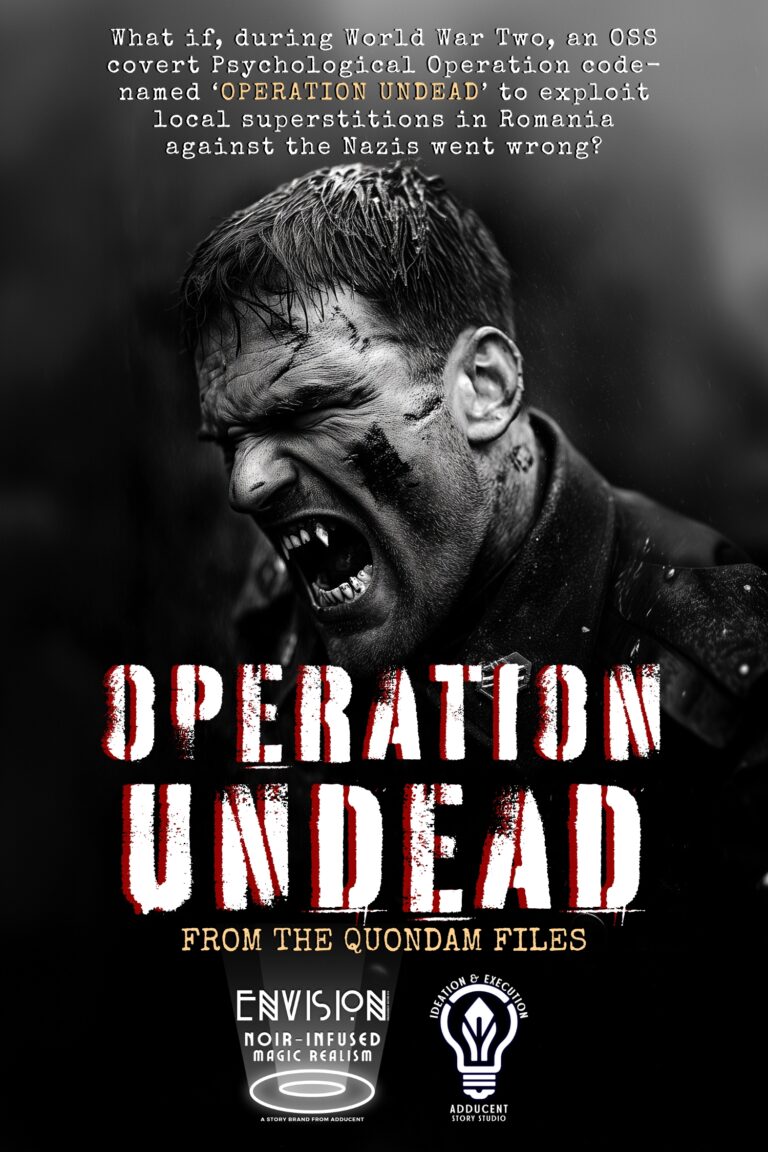
The Legend of OPERATION: UNDEAD | OSS Operations in Romania 1943-44

Key Takeaways

  • The article explores the fictional premise of OPERATION: UNDEAD, an OSS psychological operation in Romania during WWII that intertwines with local superstitions.
  • Romania’s strategic importance stemmed from its oil fields, which were vital for Germany, prompting OSS support for local resistance against the Nazis.
  • Despite no historical evidence supporting ‘THE operation, the tale blends fact, folklore, and the OSS’s actual covert activities in Romania.
  • The legend likely emerged from the OSS’s operations and the region’s deep vampire lore, amplified by post-war literature and media.
  • OPERATION: UNDEAD symbolizes how myths can evolve from wartime events, merging horror with the realities of espionage and behind-enemy-lines missions. It is the basis for The Best Halloween The Town Ever Had, The Not-Fallen Angel, and The Second Breath, found at DennisLowery.com

While researching one of our stories (series in development), whose main character is an ex-OSS officer (former Mercy Team, then X-2 and Secret Intelligence Branch) who operated in Romania and remains in Europe post-WW2, we came across the following (further below) and thought:

We’re writing an original story that answers that question (and ties into other stories within our QUONDAM series universe). The premise, plot, character list and backstories, historical and cultural research, and story codex have been completed. Writing has commenced.

Follow OPERATION: UNDEAD’s story development with the author at:

Here’s the reference we found that prompted the ‘What If?’

OSS Operations in Romania During World War II

Romania was strategically important during World War II due to its natural resources, particularly oil fields in Ploiesti, which were vital for fueling the German war machine. The OSS sought to undermine Axis influence in Romania and supported the resistance against the Nazi-backed government.

Romanian Resistance and OSS Support: In the latter part of the war, particularly after the Battle of Stalingrad, Romania’s political situation shifted. The OSS maintained contact with Romanian political and military leaders who were part of the anti-Nazi underground. Notably, the OSS worked with factions seeking to overthrow the dictatorship of Ion Antonescu, Romania’s pro-German leader. In August 1944, as the Red Army advanced into Romania, King Michael I led a coup against Antonescu and Romania switched sides to join the Allies. The OSS had helped prepare the groundwork for this realignment by fostering relationships with key anti-Axis leaders.

Operation Autonomous: One of the most notable OSS missions in Romania was Operation Autonomous in 1943. A team of British SOE (Special Operations Executive) and OSS officers parachuted into Romania to make contact with anti-Axis factions. The team, including British officers Ivor Porter, Alfred Gardyne de Chastelain, and OSS agent John Houseman (one wonders if this is the renowned British-American actor, Romanian-born as Jacques Haussmann)  aimed to prepare for the possibility of Romania breaking away from the Axis. But the operation encountered numerous difficulties. The team was captured by Romanian authorities, who kept the officers in relatively good conditions despite their alliance with Germany, recognizing the need for future negotiations with the Allies. After the 1944 coup, the OSS and SOE agents were released.

Sabotage of Ploiesti Oil Fields: The OSS played a role in coordinating sabotage missions, targeting the oil refineries in Ploiesti, a critical supply of fuel for Nazi Germany. These operations aimed to reduce the refineries’ output, complementing the strategic bombing campaign against Ploiesti, most famously the low-level air raid known as Operation Tidal Wave in 1943.

Myths and Legends Surrounding OSS Activities in Romania

The mysterious nature of covert operations, along with Romania’s rich folklore tradition, led to the development of myths and legends surrounding OSS involvement. Some of these tales blend historical facts with elements of fantasy and local superstition.

  1. Vampire Legends and Operation Undead: One of the more intriguing legends is tied to Romania’s long-standing association with vampire folklore, particularly in Transylvania. According to some stories, OSS operatives, unfamiliar with local customs and tales, encountered villagers who believed their presence was linked to ancient vampire legends. In one account, an OSS team operating near the Carpathian Mountains was said to have stumbled upon a remote village that claimed to be plagued by a vampire lord. While this story is likely a fabrication, it underscores how the intersection of wartime activities and local beliefs can create eerie, fantastical narratives.
  2. Secret Nazi Occult Operations: Another persistent rumor was that the Nazis, who had a fascination with occultism and mysticism, were conducting secret operations in Romania to harness supernatural powers or artifacts linked to ancient Dacian or Thracian civilizations. The OSS reportedly received intelligence about these supposed missions and monitored Nazi archaeological digs and occult experiments. No solid evidence has emerged to confirm such tales, but they remain part of the shadowy lore surrounding wartime Romania.
  3. Ghost Army of the Carpathians: One legend suggests that an OSS-backed Romanian resistance group operating in the Carpathian Mountains developed a reputation as the ‘Ghost Army’ due to their stealth and ability to evade capture. Some say that locals believed the group had supernatural protection or that they employed psychological warfare tactics that made the Axis forces fear they were facing an otherworldly force.

While the extent of OSS operations in Romania remains shrouded in secrecy, these myths and legends highlight the nature of covert operations in a region steeped in history and folklore.

Origins of the Operation Undead Myth

Operation Undead is an interesting and rather fanciful legend, but there is no documented historical evidence to confirm the existence of any such operation carried out by the OSS or other Allied intelligence agencies during World War II. The legend likely emerged from the deep connection between Romania, specifically Transylvania, and vampire folklore, which has captured the popular imagination for centuries.

The story of Operation Undead appears to be a mix of historical fact, local superstition, and post-war embellishment. Transylvania, a region in central Romania, is famously associated with the vampire myth, mainly due to Bram Stoker’s 1897 novel Dracula and its central character, Count Dracula, who is loosely based on the historical figure Vlad the Impaler, a 15th-century ruler known for his brutal methods of punishment.

When the OSS began operations in Romania during World War II, these vampire legends were already well-known in Western popular culture. The OSS, known for using unconventional warfare and intelligence techniques, would have certainly encountered the strong superstitions and folklore permeating Romanian rural life.

The Alleged Story of Operation Undead

According to the legend, Operation Undead occurred between 1943 and 1944, during the height of the OSS’s covert activities in Eastern Europe. The story claims that an OSS team was deployed into the Carpathian Mountains on a mission to sabotage Nazi operations and gather intelligence on German troop movements. While operating in a remote village, the team encountered locals who warned them of a ‘strigoi’ (a Romanian term for a vampire-like creature) terrorizing the region.

The myth goes further to suggest that the villagers believed the strigoi was collaborating with Nazi forces, leading the OSS team to investigate the possibility that the Germans were somehow exploiting local superstitions for psychological warfare. This narrative plays into the well-documented Nazi fascination with the occult, particularly Heinrich Himmler’s SS, which was involved in pseudo-archaeological and mystical studies across Europe.

In some versions of the story, the OSS agents were caught between fighting the Axis forces and dealing with what the villagers believed was a supernatural threat. The team supposedly investigated eerie occurrences, strange disappearances, and even the discovery of a crypt in a forgotten castle, adding to the mystery of the operation. However, no actual documents, diaries, or post-war OSS reports support these fantastical claims.

Reality vs. Fiction

The OSS was involved in operations that dealt with psychological warfare and engaging local resistance movements. Its focus in Romania was practical: working with anti-Nazi elements, sabotaging key industrial infrastructure (like the Ploiesti oil fields), and gathering military intelligence.

The Operation Undead legend likely arose after the war as a mixture of:

  • Real OSS and SOE operations conducted in remote and mysterious locations naturally gave rise to imaginative speculation.
  • The strong local vampire lore, especially as Western soldiers and intelligence officers encountered these cultural beliefs for the first time.
  • Popular depictions of vampires in literature and movies added a gothic element to the already dramatic landscape of World War II espionage and resistance efforts in Eastern Europe.

Legacy of the Legend

While Operation Undead remains a myth, it exemplifies how war and folklore can intertwine, creating larger-than-life stories that endure long after the events themselves. The tale of OSS agents facing off against vampires or Nazi occult forces adds a supernatural element to what was otherwise a brutal and very human conflict. These legends have been further fueled by post-war books, movies, and television shows that depict wartime Romania as a land filled with gothic horror, largely inspired by Stoker’s Dracula and the region’s association with the paranormal.

Want to follow the author who is developing the story based on the above information?

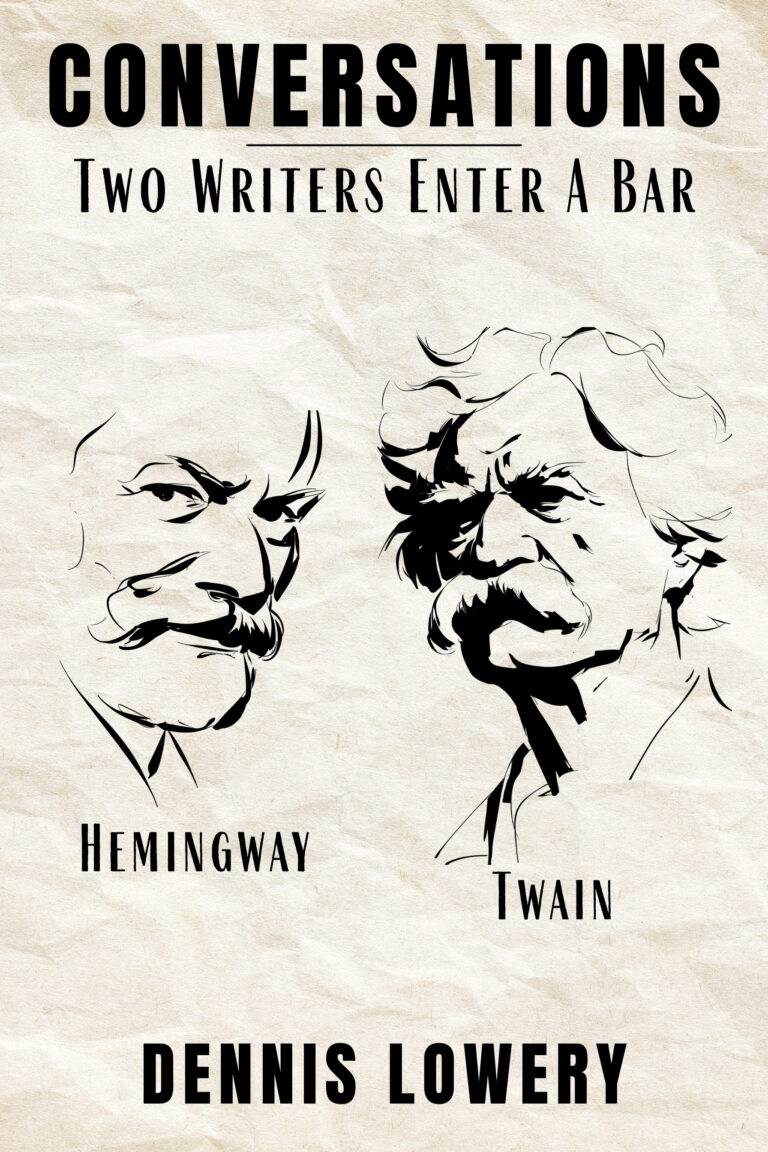
LAST CALL: Hemingway and Twain Walk Into a Bar

Two of America’s greatest writers meet in a bar to argue about whether human writing can survive AI and the age of machines.

Key Takeaways

  • Twain and Hemingway discuss the nature of writing and the impact of AI on literature.
  • They reflect on the challenges of being a writer in a digital age, emphasizing the need for authenticity and visibility.
  • Twain believes that AI can produce passable content, and one day, you might not be able to tell the difference between it and human writing.
  • Hemingway argues that true writing has emotional depth and should connect with the reader’s experiences.
  • Their conversation concludes with a wager on whether readers will discern the difference between human- and machine-generated writing by next year.

The bar was the kind neither man would have chosen sober. Fluorescent lights. A television no one watched. Peanuts in a bowl that had seen better decades.

Twain ordered bourbon. Hemingway ordered the same but didn’t say so—he just pointed at Twain’s glass and held up a finger.

• • •

TWAIN: You know what cheated us, Ernest?

HEMINGWAY: Dying.

Twain looked at him, a considered moment.

TWAIN: Timing. We had the misfortune of dying before a writer could reach his readers without first going through a man in a top hat who called himself a publisher. And I’m told—and I have this on what I consider reasonable authority, which is to say a dead man’s intuition—that a person can now write a book without a single publisher being involved in the transaction. Just hurl the thing out into the electrical bazaar and wait for strangers to pay you. It is the most American arrangement I have ever heard of, and I include the Louisiana Purchase.

HEMINGWAY: Most of what’s out there isn’t writing. It’s typing.

TWAIN: That was Capote’s line.

HEMINGWAY: He got it from me. I’m taking it back.

TWAIN: (swirling his glass) Well, the point stands regardless. If a man wanted to come back—I mean, really come back, start fresh, hat in hand, make an honest go of it—when would he do it? Because I have been dead for some time now, and I confess the rest has not improved my patience.

HEMINGWAY: Not the past. The past is no good. Everyone there already knows the ending.

TWAIN: The future, then. But how far into it?

HEMINGWAY: Now (he glances at the screen with a newsbreak and the date). March 14, 2026.

TWAIN: That is remarkably specific for a man who once needed 28,000 words to say a fish got away.

HEMINGWAY: It’s the right year. The machines learned to write. Some writers stopped trying. The ones still doing it will stand out the way a man stands in a field after everyone else has gone inside.

TWAIN: And you think this is good news, the opportunity rather than the catastrophe?

HEMINGWAY: The machine writes the way a man writes who hasn’t lived anything. The sentences are clean. The grammar works. But there’s nothing behind them. No cost. A man who writes a true sentence about loss has to have lost something. He has to sit down and bleed it out. The machine just read about it and regurgitates.

TWAIN: Now, I am not entirely sure I share your confidence on that score. I have read some of what these machines produce, and I’ll confess—reluctantly, mind you, and I’d deny it in the presence of a journalist—that some of it is passable. Some of it sounds more like me than I would care to admit, which is troubling for reasons I’d rather not examine on a full stomach.

HEMINGWAY: Passable. That’s the word. Nobody ever remembers a story that was passable. Passable is what kills you. It always was. But the worst thing is this: most people won’t know why. They’ll read something the machine made and feel almost something. Close to something. And they’ll think that’s what writing is, because they’ve never been hit by the real thing.

TWAIN: Or they have been struck by the real thing and simply can’t remember when.

Neither of them spoke for a moment. Hemingway drank.

TWAIN: (leaning back) All right. So we’re here in 2026. What is the play? I assume you are not suggesting we simply write a novel and sit by the mailbox like a pair of hopeful spinsters waiting on Valentine cards.

HEMINGWAY: No mailbox. You’d have to be visible. Not famous. Visible. They’re different. Famous means they know the name. Visible means they trust what you see that turns into writing they enjoy… that moves them.

TWAIN: You mean put yourself out there. Write in the open where they can find you—short pieces, opinions, the odd observation that might start a fight.

HEMINGWAY: Yes. But only things you’d stand behind if someone hit you for saying them.

TWAIN: I was once physically confronted over something I wrote about a local dignitary’s wife in the Territorial Enterprise. The dignitary in question was six-foot-four and had hands like saddlebags. I can assure you the experience did not sharpen my prose in any way I could measure, though it did improve the speed at which I could exit a building. The lesson I took from it was not about courage but about geography—specifically, the distance between him, me, and the nearest door.

HEMINGWAY: It worked differently for me.

TWAIN: (pause) Yes. I expect it did.

HEMINGWAY: In Paris, I wrote sketches. Small pieces for small magazines nobody remembers now. But the people who read them remembered me. By the time the novel came, they already knew what and how I could write. I didn’t have to convince them. I just had to show up with the longer work. But you have to be careful. Visibility has a cost. It worked for me until it didn’t. The fame came, and then the writing got harder because everyone was looking at the man instead of the page.

TWAIN: And the other part? Because with you, Ernest, there is always a second part you are saving like a card up your sleeve, except you have no sleeves because you are wearing one of those dreadful safari shirts.

HEMINGWAY: The other part is knowing what not to write.

TWAIN: Oh?

HEMINGWAY: Everyone now writes about themselves. Their feelings. Their mornings. What they ate. What made them sad about what they ate. The man who writes about the world—the real world, the one outside—he’ll have the field to himself.

TWAIN: Now that I take real exception to. I wrote about myself constantly and with great enthusiasm. Half of my travel books are nothing but me being baffled in foreign countries—baffled by the food, baffled by the customs, baffled by my own luggage. And they sold beautifully. The Innocents Abroad made me more money than anything a modest and upstanding man should earn from being confused in Italy.

HEMINGWAY: You wrote about yourself running into things. The river. The people. The territory. You were the window, not the view. You showed people what was on the other side. That’s different. Most people now, they stand in front of the window and describe the glass.

TWAIN: (long pause, then slowly) That is… a better distinction than I would have given you credit for. I will not say it again, so if you would like to savor it, now is the time.

HEMINGWAY: I don’t need to savor it. I know when I’m right.

TWAIN: And there it is. The modesty that made you so beloved at dinner parties.

HEMINGWAY: I was fine at dinner parties.

TWAIN: But I’ll tell you something, Ernest, because I have been thinking about it while you were busy being right. All those people writing about themselves—their mornings, their moods, their small indignities—I don’t think that’s vanity. I think it’s loneliness. They are writing at the window because they want someone on the other side to see them standing there.

HEMINGWAY: That’s their business.

TWAIN: It is. But here’s the thing. You wrote a story once—a whole story, mind you—about a waiter who didn’t want to go home at night. An old man drinking alone in a cafe. Another waiter who wanted to close up. That’s all that happens. Nothing happens. It is, on its face, a story about as eventful as watching someone else’s coffee get cold.

HEMINGWAY: It was about more than that.

TWAIN: I know it was about more than that. That is my point. You wrote about a cafe and a lightbulb and an old man’s empty glass, and somehow every lonely person who ever read it felt less alone for having read it. You didn’t write about yourself. You didn’t tell the reader you understood their loneliness. You just described the clean, well-lighted place where a man could sit with it. And that did more for every solitary reader than a thousand people writing about what made them sad about what they ate.

Hemingway said nothing. He turned his glass slowly on the bar.

TWAIN: That is what writing about the world does when it’s done by someone who has earned the right to see it clearly. It finds the loneliness without naming it. And the reader thinks, this man has been where I am, even though you never said so. (pause) I would not have done it that way. I would have needed more words and a riverboat and probably a funeral. But I recognize the thing when I see it.

HEMINGWAY: You would have made it funny.

TWAIN: I would have made it funny and then made them cry on the way home. It would have taken me twice as many words—and that riverboat—but they’d have ended up in the same place.

Hemingway almost smiled.

TWAIN: What about this business of platforms? There are newsletters now, social feeds, the whole howling carnival. A man has to pick his stage. I toured the lecture circuit for years, and I can tell you that picking the wrong stage is worse than having no stage at all. I once delivered a perfectly good lecture on the Sandwich Islands to an audience in Cleveland that had been promised a magician. The confusion was total. A woman in the front row kept waiting for me to produce a rabbit, and I could see in her eyes the precise moment she realized no rabbit was forthcoming. That is what the wrong platform feels like.

HEMINGWAY: Pick the one where people read. Not scroll. Read. There are one or two left. Write there until they know you. Then build your own room. A thousand people who chose you is worth more than a million who fell past you on the way to something else.

TWAIN: A thousand. I like that number. You can picture a thousand people in a room, which is to say you can picture yourself disappointing them individually, which I find keeps a man honest.

HEMINGWAY: You don’t need to picture them. You just write it like the person reading might not be here tomorrow.

TWAIN: Good Lord, Ernest. You could depress a brass band.

The bartender brought two more without being asked. On the television, a man was trying to sell something neither of them understood.

TWAIN: So let me gather up the pieces of your grand strategy and lay them out in order, because contrary to your philosophy, not every reader navigates by instinct, and some of us believe that a little signposting is a courtesy and not a failure of nerve. One: write short, write where they can see you. Two: write about the world, not about your breakfast. Three: build a small audience of people who chose you before you ask them to buy a single thing. Four: Do not try to write like the machines. Write what they can’t.

HEMINGWAY: Five.

TWAIN: Five?

HEMINGWAY: Don’t summarize. People who were paying attention don’t need it.

TWAIN: And people who were not paying attention deserve a second chance, Ernest. That is democracy. And good manners. Not every reader is you. Half the people who loved my books were twelve years old. A twelve-year-old requires the occasional guidepost, and he is no worse a reader for it—he is simply a reader who has not yet had the pleasure of your instruction.

HEMINGWAY: Huck on the raft. Deciding to go to hell rather than turn Jim in. You didn’t explain it. You let the boy say it, and you got out of the way.

TWAIN: (quietly) That was a good moment.

HEMINGWAY: It was good because you didn’t touch it. You put it down, and you walked away from it.

They drank. The television changed to a woman pointing at a weather map. Neither of them looked.

TWAIN: There is one more thing, though. Something you are leaving out, and I suspect you’re leaving it out because saying it would require you to admit that something other than talent matters, which has always given you indigestion.

HEMINGWAY: Say it.

TWAIN: Persistence. Just plain showing up. The willingness to be rotten on a Tuesday so that you can be less rotten on a Wednesday and maybe, if the creek don’t rise, actually good by Thursday. I have written entire books that were not worth the paper they were printed on, and I knew it at the time, and I wrote the next one anyway. That is not a strategy. I know you’ll say that. But it’s the thing underneath the strategy that makes the strategy go.

HEMINGWAY: That’s a temperament, not a plan.

TWAIN: Then I suppose you had better have the right temperament. Because in 2026 or 1876 or any year you care to name, the writer who keeps writing is the one who is still standing when the others have wandered off to sell insurance.

HEMINGWAY: On that, we agree.

TWAIN: Mark the occasion.

HEMINGWAY: Already did.

Twain emptied his glass and set it down with the care of a man who respects the ritual of a last drink. Then he looked at Hemingway the way a man looks at a poker hand he hasn’t decided whether to show.

TWAIN: One more thing before we settle up. A wager.

HEMINGWAY: Go ahead.

TWAIN: You believe the cost shows. That a year from now, a man who has lived something and written it down will produce something so different from what the machine assembles that anybody with eyes will see the gap. That the readers will know. That they’ll feel it in their hands like the difference between a loaded gun and a drawing of one.

HEMINGWAY: I do.

TWAIN: Well, I am not so certain. And I say this not to be contrary but because I have spent a lifetime watching audiences, and I know something about them that you never liked to admit. They don’t care what a thing costs. They never did. They care what it’s worth to them in the moment they hold it. If a machine writes a story that moves a man on a Tuesday night when he is lonely and sitting in his own clean, well-lighted place—he will not ask who paid for the sentence. He will just be grateful he found it… or it found him.

Hemingway was quiet for a moment. He judged his glass the way he judged things when he was deciding whether they were true.

HEMINGWAY: Maybe.

TWAIN: Did you just say maybe?

HEMINGWAY: I said maybe they won’t ask. That doesn’t mean the answer doesn’t matter.

TWAIN: And that, Ernest, is a position I can respect while completely disagreeing with it. So. Same bar. One year from tonight. We come back, we look at what’s been written, who’s been reading it, and whether anyone can tell the difference between the man and the machine. Loser buys.

HEMINGWAY: The one who was wrong buys. He owes more.

TWAIN: That is what I said.

HEMINGWAY: No. You said loser. A man can lose and still be right.

TWAIN: (pause) Ernest, that may be the saddest thing you have said all evening, and the competition has been fierce. But fine. The one who was wrong buys.

HEMINGWAY: Done.

• • •

The bar closed at two. They left separately—Twain through the front, telling an anecdote to the bartender who had not asked for one, and Hemingway through a door that may or may not have existed.

The bartender wiped down the counter and found, folded under a glass, a napkin with two lines on it in handwriting he couldn’t place—it might have been one man’s, it might have been both.

The first line read: “Hemingway says they’ll know the difference. Twain says they won’t care.”

The second: “Same seat. March 13, 2027. Wrong man buys.”


About Dennis Lowery

Dennis Lowery is an author and writer. He has ghostwritten 41 books for clients (17 novels, 13 nonfiction, nine memoirs, and two creative nonfiction). He has also worked on dozens of titles, helping develop, improve, edit, and provide publishing assistance.

DECISIONS, DISCORD, and DIPLOMACY

0

A Nonfiction Title Under Our FORTIS Imprint. Now available at booksellers.

Order directly with our distributor INGRAM for a lower price:

Key Takeaways

  • Admiral William J. Fallon‘s memoir shares critical lessons from America’s post-9/11 wars, focusing on strategic decisions and competing agendas.
  • As CENTCOM commander, Fallon witnessed how institutional interests impacted military strategies during the Iraq and Afghanistan conflicts.
  • His account includes interactions with prominent leaders and illustrates the tension between military leadership and political oversight.
  • Fallon critiques the preference for tactical responses over comprehensive strategies and reveals the consequences of these decisions.
  • With a distinguished 40-year naval career, Fallon emphasizes the importance of learning from history to improve future decision-making.

Strategic Decisions | Competing Agendas | The Consequences

History’s patterns repeat when we fail to learn from them. Admiral William J. Fallon’s memoir offers critical lessons from America’s post-9/11 wars that remain urgently relevant today.

As CENTCOM commander from 2007-2008, Fallon oversaw U.S. military operations during the Iraq surge and Afghanistan war, witnessing firsthand how competing institutional agendas undermined strategic thinking. Drawing from four decades of naval service, records, experiences, and extensive personal notes, he reveals the decision-making processes that shaped America’s longest conflicts.

Fallon chronicles his journey from Cold War operations through serving as Vice Chief of Naval Operations during 9/11, commanding U.S. PACIFIC COMMAND, and finally leading CENTCOM. His account details interactions with key figures, including President George W. Bush, Secretary of Defense Robert Gates, General David Petraeus, and regional leaders such as Egypt’s President Mubarak, Afghanistan’s President Karzai, and Pakistan’s President Musharraf, while examining the bureaucratic challenges of managing simultaneous wars.

One incident involves the Esquire magazine article that ended Fallon’s career by portraying him as opposing the Bush administration’s Iran policy. It exemplifies the complex intersection of military leadership, political oversight, and media influence that continues to shape national security decisions.

Fallon demonstrates how American leaders repeatedly chose tactical responses over comprehensive strategic planning, which contributed to prolonged conflicts and uncertain outcomes. His analysis of what he terms the “tyranny of agendas”—competing institutional interests that distort decision-making—provides essential insights into how strategic failures occur and how they might be prevented.

About The Author

On September 11, 2001, Admiral Fallon was meeting with Chief of Naval Operations Admiral Clark and Captain Bob Erskine in the Pentagon when American Airlines Flight 77 struck the building. As Vice Chief of Naval Operations, he immediately directed the evacuation and recovery of Navy personnel from the burning building, then pivoted to orchestrating the Navy’s role in the retaliatory strikes against Al Qaeda and Taliban forces. This defining moment—transforming from rescue commander to war planner in a single day—exemplified the decisive leadership that would characterize his subsequent commands during America’s most challenging military period in a generation.

Over his 40-year naval career, Fallon commanded at every level, from flying combat missions off aircraft carriers during Vietnam to directing all U.S. military operations across three continents. As Commander of U.S. Central Command (2007-2008), he oversaw 230,000 troops engaged in two simultaneous wars, managing operations from Egypt to Pakistan during the Iraq surge and the resurgence of Taliban forces in Afghanistan. His tenure marked a critical shift in counterinsurgency strategy and regional diplomatic engagement.

Before CENTCOM, Fallon spent two years leading U.S. Pacific Command, where he managed military relations with 43 Asia-Pacific nations, contained North Korean nuclear ambitions, and navigated China’s military modernization. His diplomatic acumen proved invaluable when, as Presidential Envoy to Japan, he restored bilateral relations following the USS Greeneville collision with the Ehime Maru fishery training vessel—a crisis that threatened the U.S.-Japan security alliance.

Fallon’s combat leadership began in earnest during the 1991 Gulf War, where he commanded Carrier Air Wing Eight against Iraqi forces. He later led NATO naval forces during the Bosnia intervention and commanded the U.S. Atlantic Fleet, responsible for training and certifying every East Coast naval unit for global deployment.

A Villanova University graduate with a master’s degree in International Studies from Old Dominion University, Fallon also completed studies at both the U.S. Naval War College and National War College. He served as a Robert E. Wilhelm Fellow at MIT’s Center for International Studies, bringing operational experience to academic strategic discussions. Currently Chairman of GoSecure Inc., a cybersecurity firm, Fallon serves on the Global Affairs Advisory Board of Occidental College, Georgetown University’s Institute for the Study of Diplomacy, and the American Security Project. He is a member of the Council on Foreign Relations and contributes insights on the intersection of military strategy, diplomacy, and emerging security challenges.

Most nonfiction explains. Strong nonfiction stages.

0

A fifteen-year-old in a cargo van on a Texas highway, sweat running down his back, hand surfing out the window as a song he’s never heard comes through a crappy dashboard speaker. You’re there before anyone tells you why it matters.

That’s the difference between information and narrative. Not decoration — architecture. The same tools fiction uses — pacing, tension, scene construction, what you’re told and when — applied to what actually happened.

Real life already contains stakes, turning points, emotional consequence, and uncertainty. But those elements don’t arrange themselves. They must be shaped with intention. The narrative spine extracted. Summary replaced with scene. Momentum built through structure, not volume.

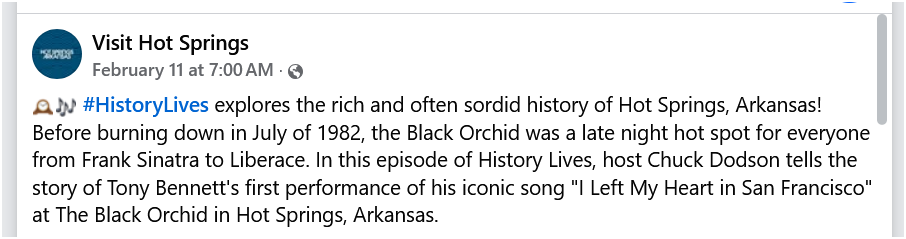
In One of Those Hot Texas Nights, memory isn’t summarized — it’s reconstructed moment by moment until the reader feels the heat radiating through the floorboard. In The Black Orchid, a woman’s sudden disappearance unfolds beat by beat through disciplined narrative architecture — no invention, just the careful sequencing of what was real.

Truth doesn’t need decoration. It needs craft.

When nonfiction is written with narrative discipline, truth does the work fiction has to fabricate — and stays with the reader long after the page.

It’s what we do with memoir and nonfiction clients — finding the narrative already inside the material and building it with the discipline it deserves.

Read the examples:

https://adducentcreative.com/one-of-those-hot-texas-nights/

https://adducentcreative.com/the-black-orchid-creative-nonfiction/

Key Takeaways

  • Narrative discipline transforms nonfiction by using tools typical of fiction, such as pacing and tension.
  • Real life holds emotional stakes and uncertainty but needs structure to shape its narrative effectively.
  • In ‘One of Those Hot Texas Nights,’ memory is reconstructed to engage readers in the moment.
  • Truth in nonfiction requires craft, not decorative language, to resonate with the audience.
  • The article emphasizes the importance of finding and building the inherent narrative in memoir and nonfiction writing.

THE BLACK ORCHID [Creative Nonfiction]

An Example of Creative Nonfiction

Prologue

I was home on a 30-day leave at a gym when an Army sergeant from the local recruiting office saw me in the ring sparring with a Navy recruiter he knew. He commented, watching us: “You’re strong… handle yourself pretty well. I know a club owner looking for a guy to work the door and floor. You can earn some good side money. Interested?”

I was—extra cash is always good—and I started at The Black Orchid that night.

The Vignette

She told me, “Behave…”

“What?”

She smiled… and I’d felt it before… Denise’s smile stirred me more than the naked woman on the stage who cupped her breasts, teased nipples erect, and presented them to the crowd.

Denise tended bar, and there was something about her that drew men and women. I watched the bar as closely as the stage and floor to keep men from crossing that boundary… trying to touch her. But it was partly her fault. Denise would tease and taunt; she was maddening in that way.

After a warning fails, when you pull a guy off or away from a girl to prevent him—and the situation—from getting out of hand, afterward, the girls don’t give you any adoring ‘my hero… my defender’ bullshit. I’d get a nod… a tired, jaded smile… and sometimes a bill or two from their tips. Maybe a caress at closing. But it’s business for them and you.

Few drunks fight well, but those that do… can hurt you. It’s hard to judge what the fuck they’ll do. Anger. Embarrassment (if they’re with someone they have to put on a show for… you know, of being a man in front of others… their buddies). Alcohol makes them brave. Sometimes makes them dangerous. You hope it makes them stupid for a moment. So you can get inside their reach and put them down, control the situation before someone gets really hurt.

Contrary to what you see in some movies—especially old ones—bar fights, at least all but one I’ve been in (Bermuda, resulting in being kicked out of the country), are quick and mostly one-on-one. It’s not a dance and paw-at-each-other kind of thing. And there are no rules; it’s any way you can….

“Behave…” she said again. Denise had come from behind the bar and pointed at B5 on the jukebox.

I read its label. Lola… The Kinks?”

“Yes,” she mouthed with moist Cupid’s bow lips… “Bee Five… behave… play it for me.”

She leaned close, breasts pressed against my right shoulder, and whispered in my ear, “Give me a minute, and then play it.”

I felt the warm satin touch of her lips linger on the lobe of my ear, and, with a last brush of my cheek, she turned and walked to the left, stepping up onto the stage, vacant during a break.

That’s not right.

Denise didn’t just walk. She flowed. Her hips swayed—not exaggeratedly or forced—with natural grace. I’ve met few since who moved like her. Her ass was a perfect inverted heart shape, and watching her walk aroused me.

This was the first time I saw her dance. And I think she did it for me because I had asked if she’d ever been one… a dancer. That had been the night before. I had noticed her watching me since I started at the club, but hadn’t talked with her at length until the third night. Her eyes, an onyx glitter and gleam in the bar lights, had a depth that mesmerized… I felt pinprick tingles across my skin every time I looked into them.

Languid at first on the stage, Denise picked up the pace to match the song. Our eyes met, and she held the gaze as her back arched and lips curled, a grin of public pleasure. For you… seemed the promise in her eyes. She danced clothed except for the moment when she unzipped her jeans and, turning her back to the crowd, achingly slow—inch by inch—peeled them down to reveal the perfect, God-given or genetically-graced, pantie-less curve of her ass. Then—with a taut shudder and shallow breaths—she pulled the jeans up.

In the after-song quiet, she settled with a deep sigh that carried through the room. Standing for a beat, breathing, chest rising and falling, the buttons of her white shirt straining to free from the buttonholes, she faced the lights. A sweep of her hand through long dark hair cleared it from her face, and with a last look at me, she stepped down and returned to the bar.

Every night that followed, at 9:00 pm, she’d come from behind the bar and whisper, “Behave…”

And I’d play her song.

As she danced, I never wanted so badly to misbehave.

Epilogue

When I hear the song, Denise asked me to play, I sometimes wonder what happened to her.

We both felt a jolt of sexual electricity. The tingling touch that makes stomach muscles twitch and triggers that ‘wanting’ ache… for more. An anticipation…. I think—I know—she felt it, too. And it sustained through many nights working together over three weeks.

What happened afterward, her sudden disappearance (after she finally agreed to see me outside the club), has always puzzled me.

It was the last week of my 30-day leave, and on the day and time of our date, I went to pick her up to learn she’d abruptly moved out. Left without notice to her landlord or the manager at The Black Orchid. The manager told me she had applied for a bartender position six months ago and—as was fairly standard back then—got it by showing proficiency. Jobs like that weren’t dependent on any background check. He knew only basic personal details; no prior history.

To my knowledge (and out of curiosity, I checked during my next leave period), no one ever saw her again.

When I hear the song Lola … it all comes back. And I think maybe it—the song’s meaning and the true account of its origin (the encounter it represented for the songwriter)—is the solution to the mystery. The answer to Denise’s disappearance.

You see, my suspicion is… Denise let her guard down by agreeing to see me outside a business/work setting. Realizing what I’d likely discover and the aftermath… had frightened her. Not that she knew it, but I would not have been angered or gone into some form of homophobic, prejudicial rant or retaliation. In Europe, I’d had men come on to me and firmly—without rancor—turned down their overtures, more strongly if they persisted. But back then, certainly in Hot Springs, Arkansas, coming out as transgender was not something easy or wise to do. Though over four decades ago, I might have been part of an LGBTQ+ encounter, too… but who truly knows why Denise disappeared as she did.

Still, the memory of this experience… and the small personal mystery… lingers.

Ray Davies, who wrote the song lyrics based on his real experiences, was once asked in an interview whether Lola was a man or trans, and he answered, “I don’t know, all I know is that Lola was all right.”


Before it became a strip club in the ‘70s—in its and Hot Springs’ post-Prohibition heyday (late 1940s to late ‘60s – early 70s)—The Black Orchid was a prominent nightclub with some notable entertainers appearing:

It burned down the same month/year I left the U.S. Navy.